
Insurance Eligibility Verification That Stops Denials Before They Happen
41 percent of US providers now face claim denial rates above 10 percent. The single biggest cause? Eligibility errors at the front end. We verify every patient’s active coverage, copay, deductible, and prior auth requirement 7 days before the visit, inside your EHR, across every major payer.

What is insurance eligibility verification?
Insurance eligibility verification is the process of confirming a patient’s active health coverage, plan benefits, copay, deductible, out of pocket maximum, and any prior authorization requirements before the visit. It’s the single biggest front end step that decides whether a claim gets paid or denied. Done 7 days out, it’s a 3 minute check. Done at check in, it’s a crisis. Done after the claim is already submitted, it’s a denial and a rework.
The work involves three layers: confirming the plan is active, pulling the exact benefits structure, and flagging anything that needs action (a missing pre auth, a terminated plan, a secondary insurance that changes the payment order). The first layer is automated. The other two need a trained specialist.
Why eligibility verification is the highest leverage fix in your revenue cycle
Here’s what the 2024 and 2025 data actually says. Experian’s 2025 State of Claims report found 41 percent of providers now face denial rates above 10 percent, up from 38 percent in 2024 and 30 percent in 2022. 68 percent of providers say clean claims are harder to submit than a year ago. 54 percent say claim errors are actively increasing.
Inside those numbers, eligibility is the hidden bleed. 68 percent of providers name inaccurate or incomplete patient data at intake as a primary driver of denials. Administrative eligibility errors (wrong member ID, demographic mismatch, inactive coverage) sit in the top 5 of every denial root cause analysis published in the last 3 years. Each denial costs a practice roughly 43 dollars just to process, before you get to the rework and the delay.
The initial claim denial rate in 2024 hit 11.8 percent. Practices with disciplined pre visit eligibility verification typically run 3 to 5 percent. That 7 point gap, on a practice billing 500 claims a month at 150 dollars average, is roughly 5,250 dollars a month in claims that shouldn’t have been denied in the first place. Not every one gets recovered. Most never do.

One opinion worth stating plainly: Eligibility verification is boring work. That’s exactly why it’s underdone. Practices chase denial management and appeals because they feel productive. Verifying coverage 7 days before a visit doesn’t. But a denied claim recovered through appeals is always more expensive than the eligibility check that would have prevented it.
How does our eligibility verification process actually work?
Five steps. Every patient, every visit.
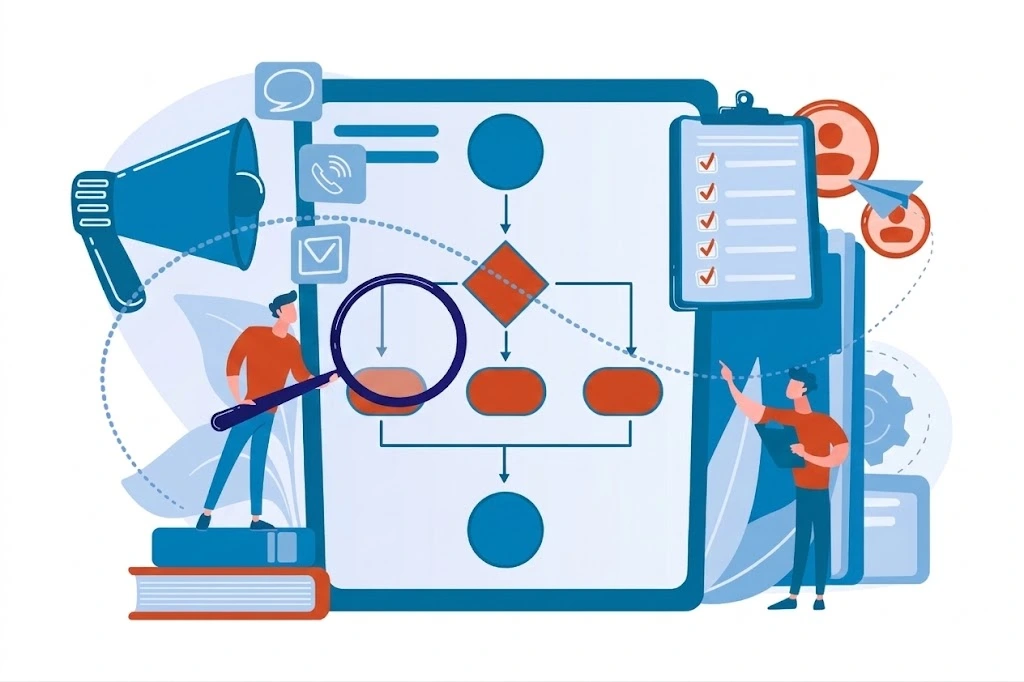
Step 1. We pull patient and insurance data 7 days out
Our specialists log in to your EHR (Epic, Kareo, athenahealth, AdvancedMD, DrChrono, eClinicalWorks, or whichever you run), pull tomorrow's appointments plus 7 days forward, and extract the data needed for verification: patient name, DOB, insurance policy number, group ID, subscriber relationship, and appointment type. No manual data entry on your end.
Step 2. We run real time checks across every payer
Wherever possible, we use EDI 270/271 transactions for sub second verification. Where the payer doesn't support EDI or the response is incomplete, we hit the payer portal (CMS, Availity, UHC, Aetna, Anthem, BCBS state sites, managed Medicaid MCO portals). For complex benefits questions, we call the payer directly.
Step 3. We verify secondary and tertiary coverage
For patients with more than one insurance, we run coordination of benefits. Simple COB errors are one of the most expensive and fixable denial categories. We document the payment order (primary, secondary, tertiary) so the claim goes to the right payer first.
Step 4. We update your EHR and PMS
Every verified patient gets written back to your system with: coverage active through [date], copay [amount], deductible remaining [amount], out of pocket max remaining [amount], prior auth required [yes/no for specific CPT codes], network status, and any notes a front desk staffer needs at check in.
Step 5. We flag exceptions and escalate
Inactive coverage, terminated plans, missing prior auth, or unexpected patient responsibility over a threshold (usually 500 dollars) gets flagged to your practice manager within 2 business hours. Your team gets time to reschedule, authorize, or have the financial conversation with the patient before check in day.
Curious how much your practice is losing to eligibility errors?
Send us your last 90 days of denied claims. We’ll categorize them by root cause and show you exactly how many were preventable with pre visit verification. Free. No commitment.
Which payers do we verify with?
All of them that matter. If it has a 270/271 EDI endpoint, a provider portal, or a phone line, we verify there.
Commercial
UnitedHealthcare, Aetna, Cigna, Humana, Anthem, all BCBS plans (every state), Kaiser Permanente, Elevance Health, Molina Healthcare, Centene (Ambetter), Oscar Health, Bright Health, and regional commercial plans.
Government
Medicare Part A and B (via MAC portals and MBI), Medicare Advantage plans (all major carriers), all 50 state Medicaid programs, Medicaid managed care organizations (MCOs), CHIP, Tricare, VA, Indian Health Service.
Workers' comp, auto, and specialty
Medicare Part A and B (via MAC portals and MBI), Medicare Advantage plans (all major carriers), all 50 state Medicaid programs, Medicaid managed care organizations (MCOs), CHIP, Tricare, VA, Indian Health Service.

We work with your existing EHR
- Epic
- Cerner (Oracle Health)
- athenahealth
- eClinicalWorks
- Kareo (Tebra)
- AdvancedMD
- DrChrono
- NextGen
- Practice Fusion
- Meditech
- Greenway Health
- Modernizing Medicine
Running something else? Tell us. If it runs in a browser or has a Citrix connection, we can work in it.
Real results from a real practice
Practice type and location anonymized for privacy. Metrics are from the client engagement record.
Orthopedic Group (5 Providers, FL)
Achieved a massive reduction in denial rates and improved cash flow through disciplined pre-visit eligibility protocols.
The Challenge
A 19% denial rate and 31-day payment cycle. Eligibility was only checked at check-in, prior authorizations were tracked on unmanaged spreadsheets, and patient AR over 60 days was constantly rising.
Our Solution
Implemented a 7-day pre-visit verification protocol, established a dedicated prior auth queue for top 20 CPT codes, integrated secondary COB checks, and automated real-time patient responsibility reporting.
- Bundled with full billing: Included in our percentage of collections model, typically 4 to 8 percent depending on specialty and volume. No separate line item.
- Standalone per check: Flat rate per eligibility verification, typically 1.50 to 4 dollars depending on complexity (EDI check, portal check, or phone verification).
- Monthly retainer: For high volume practices running more than 2,000 verifications a month, we offer a flat monthly rate.
- No setup fees: No long term contracts. Month to month.
- Free eligibility audit and 90 day denial analysis before any engagement begins.
How do we charge for eligibility verification?

We’ll quote the exact number after we see your call volume. No generic rate cards.
In house verification vs outsourced eligibility verification

| Dimension | In house front desk | Medicotech Verification |
|---|---|---|
| When verification happens | Usually at check in, sometimes the day before | 7 days pre visit, every visit |
| Verification method mix | Mostly payer portals, rarely EDI | EDI first, portal second, phone for complex cases |
| Prior auth tracking | Often a spreadsheet or sticky notes | Dedicated queue tied to CPT codes |
| Coordination of benefits | Skipped for ~60% of multi plan patients | Run on every patient with secondary coverage |
| Medicare MBI verification | Only when the claim denies | Pre visit, every Medicare patient |
| Turnaround on urgent checks | Depends on staff availability | Under 2 hours, guaranteed |
| Cost per verification (loaded) | 6 to 12 dollars (staff time) | 1.50 to 4 dollars (per check) or bundled |
Who's a fit for our eligibility verification service?
- Practices with a claim denial rate above 8 percent (industry average is 11.8 percent, best in class is under 5 percent)
- Specialty practices with heavy prior authorization load (orthopedics, cardiology, pain management, oncology, mental health)
- Practices with high Medicare or Medicare Advantage volume where MBI and MSP errors are recurring
- Practices with patient AR over 60 days that keeps growing
- Small and mid size groups where the front desk is verifying coverage between check ins
- Multi site groups where verification quality varies by location

If you have one provider in steady state with no renewals due and clean CAQH, you don’t need us. Otherwise, we probably shorten your timeline.
Insurance Eligibility Verification FAQs
What is insurance eligibility verification?
Insurance eligibility verification is the process of confirming a patient’s active health coverage, plan benefits, copay, deductible, out of pocket maximum, and any prior authorization requirements before the visit. It’s the single biggest front end step that determines whether a claim gets paid or denied.
How much does outsourcing insurance eligibility verification cost?
Most US practices pay either a flat rate per verification (typically 1.50 to 4 dollars per eligibility check) or bundle verification into a percentage of collections RCM engagement at 4 to 8 percent. Medicotech offers both models. We quote the exact number after reviewing your monthly visit volume and payer mix.
How far in advance should insurance be verified?
Best practice is 7 days before the visit, then again 48 hours before for plans with active termination risk (ACA Marketplace, Medicaid). Same day verification at check in should be a final safety check, not the primary verification. 7 days gives you time to resolve issues without rescheduling.
Which payers does Medicotech verify coverage with?
All major commercial payers (UnitedHealthcare, Aetna, Cigna, Humana, BCBS plans in all 50 states), Medicare Part A and B, Medicare Advantage plans, all state Medicaid programs including managed Medicaid MCOs, Tricare, VA, workers compensation, and most regional and specialty payers. If it has a 270/271 EDI endpoint or a provider portal, we can verify it.
Do you verify Medicare eligibility including MBI?
Yes. We verify Medicare Part A, Part B, and Medicare Advantage through MAC portals and the Medicare Beneficiary Identifier (MBI) lookup service. We capture effective dates, termination dates, Part B deductible status, and any Medicare Secondary Payer flags before the visit.
How quickly do eligibility checks turn around?
Real time EDI checks return in seconds. Portal checks take 2 to 5 minutes per patient. Phone verification, used for complex benefits questions or when a payer portal is down, takes 15 to 30 minutes. We target 100 percent of scheduled verifications completed 7 days out, with urgent same day requests turned around within 2 hours.
Is Medicotech HIPAA compliant for eligibility verification?
Yes. Every Medicotech specialist signs a HIPAA business associate agreement, works inside your EHR or verification tool under role based access, and uses encrypted EDI connections. We keep audit logs of every 270/271 transaction and never store PHI on local devices.
Can eligibility verification actually reduce denial rates?
Yes, and this is where most practices leave money on the table. Eligibility errors and missing prior authorizations sit in the top 5 causes of claim denials. Practices with disciplined pre visit verification typically run denial rates of 3 to 5 percent versus the 2024 industry average of 11.8 percent. The math tracks directly.
What information do you capture in an eligibility check?
Active coverage status and effective dates, plan name and type (HMO, PPO, EPO, POS), network status (in or out), copay by service type, deductible amount and remaining, out of pocket maximum and remaining, coinsurance percentages, prior authorization requirements by CPT code, referral requirements, coverage limitations or exclusions, coordination of benefits order, and Medicare Secondary Payer flags.
What's the difference between eligibility verification and prior authorization?
Eligibility verification confirms the patient has active coverage and documents the benefits structure. Prior authorization is the separate approval process that specific services (surgeries, imaging, specialty drugs) require before the payer agrees to pay. They’re connected but distinct. We do both, and we flag the prior auth need during the eligibility check so nothing slips.
How fast can we onboard?
Most practices go live in 7 to 10 business days. Day 1 to 3 is BAA, EHR access, and payer list mapping. Day 4 to 6 is a test week running parallel verification alongside your current process. Day 7 onward is full handoff. We don’t cut over until your first pass rate in the test week beats your current baseline.
Ready to stop losing claims to preventable denials?
Send us your last 90 days of denied claims and a week of your current eligibility workflow. We'll categorize denials by root cause, show you exactly how many were preventable, and quantify the dollars you're leaving on the table. Free. No commitment. A dedicated Medicotech specialist walks you through the findings in a 30 minute call.
Prefer email? hello@medicotechllc.com
how to verify patient insurance, how far in advance to verify insurance, what is insurance eligibility verification, how much does eligibility verification cost
Related services from Medicotech
- Complete medical billing services for US practices our core offering, eligibility verification included .
- Insurance credentialing and enrollment get your providers contracted with the right payers .
- Patient help desk services the front desk layer that uses the verified coverage data.
- Denial management services recover claims that already got denied .
- Revenue cycle management end to end RCM with help desk included .
- Medical billing and coding services clean claims start with accurate coding and verified coverage .
Testimonials From Our Valued Clients
Posted on GoogleTrustindex verifies that the original source of the review is Google. Professional, responsive, and knowledgeable medical billing team. They have been a great support for our practiceLoad more