
Patient Help Desk Services That Fill Your Schedule and Collect What You're Owed
Your front desk is drowning in calls. Patients wait on hold, miss appointments, and slip through follow up. We run your patient help desk for you. HIPAA compliant, inside your EHR, answering in under 30 seconds, and tied directly to your revenue cycle.

What is a patient help desk service?
A patient help desk service is an outsourced team that handles your practice’s inbound and outbound patient calls, appointment scheduling, insurance verification, copay collection, and patient billing questions. It works as a remote extension of your front desk. Agents log in to your EHR, answer in your practice’s name, follow your scripts, and hand off warm transfers to your clinical staff when needed. Done well, it frees your on site team to focus on patients in the waiting room instead of the phone ringing off the hook.
There’s a second meaning of “help desk” floating around. IT help desk for hospitals covers computers and software. That’s not what we do. We handle the patient facing work: the calls, the scheduling, the copays, the insurance questions, the balance follow up.
Seamless Integration with Your Existing EHRs
Here’s the math that most practice owners walk past. A single full time front desk hire costs roughly 42,000 to 55,000 dollars a year once you load benefits, PTO, training, and turnover. The average tenure of a front desk employee is about 14 months. That means every year and change, you’re training a new person from scratch. Phones go unanswered during the learning curve. Eligibility gets missed. Copays walk out the door.
Then there’s the call volume problem. A 2 provider primary care practice takes 80 to 120 inbound calls on a normal Monday. Tuesday after a holiday weekend hits 150 plus. Your one receptionist can’t answer them all. The calls that don’t get answered turn into voicemails, no shows, and patients who call a competitor.
MGMA’s 2025 patient access report put numbers on it. No shows and last minute cancellations can consume roughly 14 percent of a medical group’s daily revenue, with losses around 150,000 dollars per physician annually in some models. A July 2025 MGMA poll also found 71 percent of practices have less than one in four patients using digital tools to book. That gap still lives on the phone. And right now your front desk is the one absorbing it.

One opinion most practice managers won’t want to hear: You don’t have a staffing problem. You have a call routing problem. Hiring a second receptionist rarely fixes it because the calls spike in 90 minute windows, not across the whole day.
What does our? patient help desk actually do
We split the work into three tracks. Most practices bundle all three. Some just need one.
Patient Help Desk
- Inbound and outbound calls. We answer in your practice’s name, under your scripts, with your hold music if you want it. Outbound goes to referrals, recalls, and balance reminders.
- Appointment scheduling. Agents book inside your EHR, enforce your scheduling templates, and protect your provider’s productive hours. Double books don’t happen.
- Patient registration. Demographics, guarantor, primary and secondary insurance, HIPAA acknowledgement, and practice consent all captured before the visit.
- Insurance eligibility and benefits. Real time verification seven days before the appointment so surprise patient balances don’t happen on check in day.
- EHR chart assistance. Patient portal unlocks, record requests, refill triage to the right clinical staffer, and release of information handling.
- Transportation coordination. For patients on managed Medicaid plans with NEMT benefits, we arrange non emergency rides so they actually make the visit.


Front Desk Services
- Patient data verification. We confirm personal, demographic, and insurance details before every visit. Forms in, forms checked, forms attached to the chart.
- Visitor and caller screening. We filter the calls. Sales calls go away. Patient emergencies go straight to your clinical triage line. Your physicians don’t get pulled out of rooms.
- Patient questions and routing. Billing questions, clinical questions, refill questions, records questions, and general questions all get the same answer across calls. No more “the last person told me something different.”
- Appointment confirmations and reminders. We run a 5 day, 2 day, and same day reminder sequence across calls, text, and email. Practices using structured reminder workflows can reduce no shows by up to 70 percent according to industry benchmarks summarized by Kyruus Health.
Patient A/R Management
- Copay and deductible collection at check in. Agents flag expected patient responsibility and prompt the collection before the patient sits down.
- Online payment follow up. We call, text, and email patients with outstanding balances using a 30, 45, 60, 90 day cadence that actually collects.
- Payment plan setup. For balances over 400 dollars, we offer structured plans. Your AR stops aging because the patient said yes to 75 dollars a month.
- Patient statements and invoices. Clear statements go out every month, the balance is itemized by date of service, and the patient knows exactly what they owe.
- Pre collections handoff. For accounts over 120 days with no engagement, we prepare the collections file with full call history so your collections partner can take it cleanly.

How does the Medicotech help desk actually work?
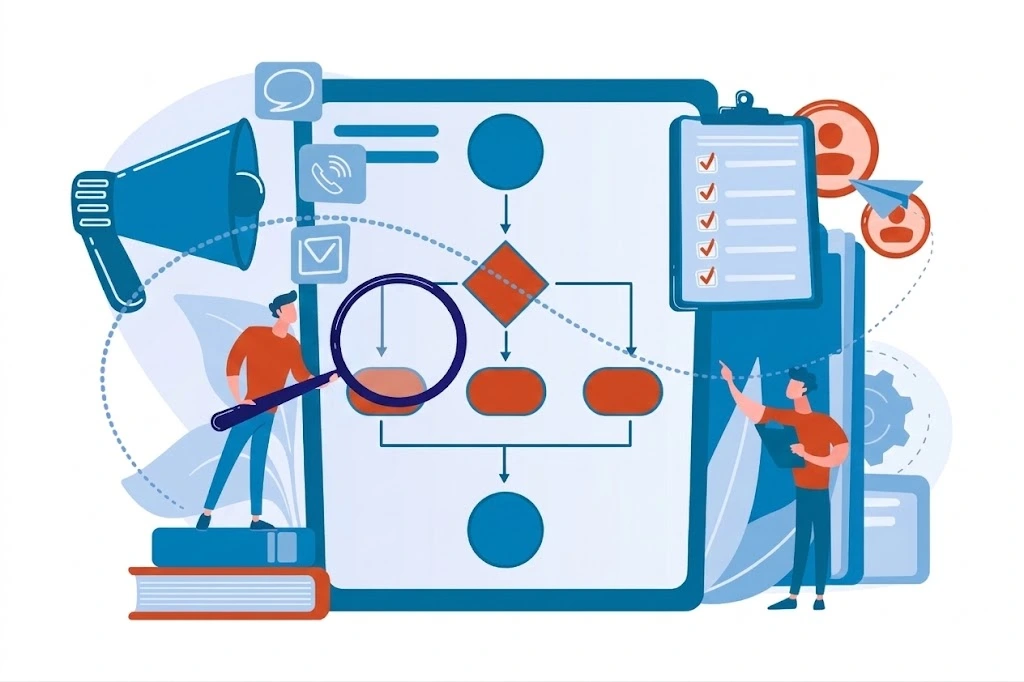
Four steps. No black box.
We map your call patterns and gaps
You send us two weeks of call volume data, your current scripts (or tell us you don't have any), your EHR, and your top 5 payers. We run a free audit against that data and show you where calls are falling, where eligibility is missed, and where copays are going uncollected.
We set up access, scripts, and coverage
BAA signed. EHR access provisioned with role based permissions. Scripts tailored to your practice voice, your specialty, and your top 20 payer rules. Coverage windows aligned to your call peaks. No cookie cutter schedule."
We run a shadow week then go live
Our agents shadow your current receptionist for 3 days. Real calls, silent listening, note taking. Then we run 2 days of parallel coverage with handoffs. On day 6, we go live. You approve every script change before anything goes into production.
We report weekly and tune monthly
You get a weekly KPI report: calls handled, avg answer time, abandonment rate, appointments booked, no show rate, copays collected, patient AR aged over 60 days. Once a month, we sit down with your practice manager and tune the scripts, the reminder cadence, and the escalation rules.
Curious what's leaking from your front desk right now?
Send us two weeks of your call log. We’ll tell you how many calls went unanswered, how many eligibility checks got skipped, and how much patient AR aged past 90 days. Free. No commitment.
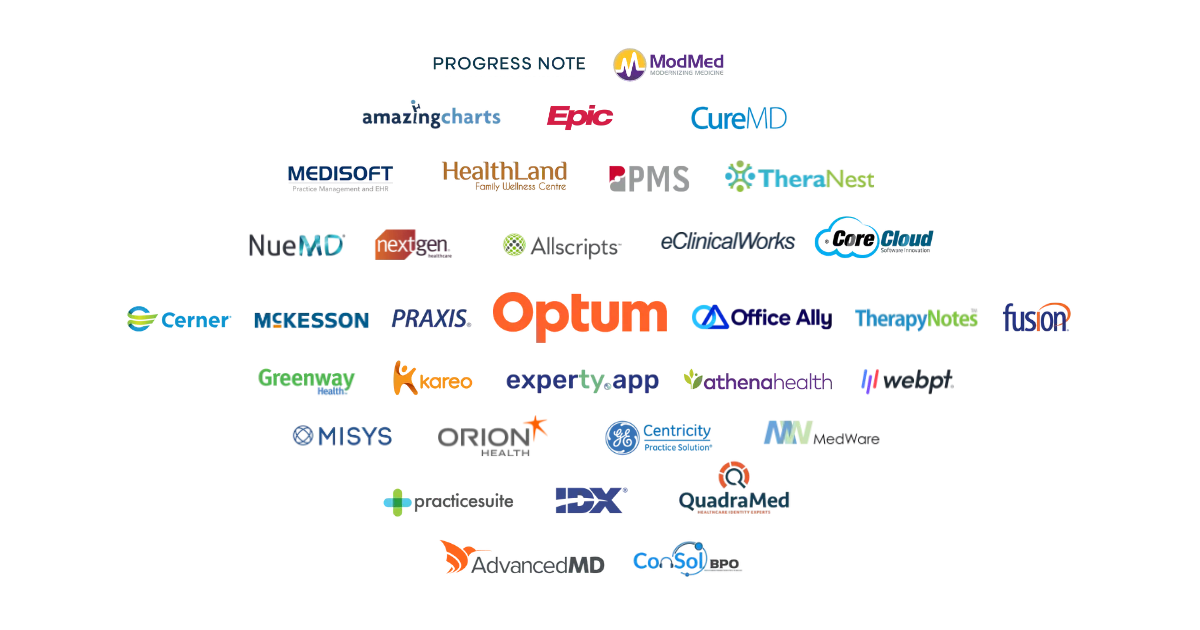
We work with your existing EHR
- Epic
- Cerner (Oracle Health)
- athenahealth
- eClinicalWorks
- Kareo (Tebra)
- AdvancedMD
- DrChrono
- NextGen
- Practice Fusion
- Meditech
- Greenway Health
- We log in to yours. No migration, no new software for your staff to learn. Our agents are trained on:
Modernizing Medicine
Running something else? Tell us. If it runs in a browser or has a Citrix connection, we can work in it.
Real results from a real practice
Practice type and location anonymized for privacy. Metrics are from the client engagement record.
Internal Medicine Group (3 Providers, TX)
A complete operational turnaround focusing on patient flow, communication efficiency, and AR recovery.
The Challenge
Struggling with a 14% no-show rate, 22% of inbound calls hitting voicemail during peaks, and a ballooning AR over 60 days, the practice was bottlenecked by administrative overload.
Our Solution
We centralized inbound call management, implemented a 7-day pre-visit eligibility workflow, deployed an automated 5-day/2-day reminder sequence, and enforced check-in copay prompts.
- The patient help desk is typically bundled into our percentage of collections model, usually 4 to 8 percent depending on specialty and call volume.
- Standalone help desk (no billing bundled) starts at a flat hourly rate based on coverage hours and call volume.
- No setup fees. No long term contracts. Month to month.
- Free front desk audit and 2 week call log review before any engagement begins.
How do we charge ?

We’ll quote the exact number after we see your call volume. No generic rate cards.
In house front desk vs outsourced patient help desks

| Dimension | In house front desk | Medicotech Help Desk |
|---|---|---|
| Annual cost per seat (loaded) | 42,000 to 55,000 dollars | Tied to collections, typically 30 to 40 percent less |
| Coverage hours | Usually 8 to 9 daily, 5 days | Up to 24/7, scaled to your call peaks |
| Turnover risk | Retraining every 14 months on average | Team continuity, backup coverage built in |
| EHR proficiency on day 1 | 3 to 6 weeks to ramp | Pre trained on 12+ EHR platforms |
| Reminder sequences | Whatever your EHR does by default | Structured 5 day, 2 day, same day outreach |
| Patient AR follow up | Usually the last thing anyone has time for | Dedicated queue with 30, 45, 60, 90 day cadence |
| HIPAA risk | Depends on your training program | BAA signed, role based access, encrypted logs |
Who's a fit for our patient help desk?
- Solo and small group practices (1 to 10 providers) where the receptionist is doing four jobs at once
- Specialty practices with high pre authorization volume and complex payer mix (cardiology, orthopedics, mental health, pain management)
- Multi location groups that need consistent phone handling across sites
- Practices with a no show rate above 10 percent
- Practices with patient AR over 60 days that keeps growing month to month

If your front desk is the bottleneck for everything else, we’re probably a fit. If your front desk runs smoothly and your AR is clean, you don’t need us. We’ll tell you during the audit.
Patient Help Desk FAQs
What is a patient help desk service?
A patient help desk service is an outsourced team that handles your practice’s inbound and outbound patient calls, appointment scheduling, insurance verification, copay collection, and patient billing questions. It works as a remote extension of your front desk, so on site staff can focus on patients in the waiting room instead of the phone.
How much does outsourcing a patient help desk cost?
Most US medical practices pay between 4 and 8 percent of collections for a bundled help desk plus billing service, or a flat hourly rate starting around 12 to 18 dollars for standalone front desk support. Medicotech bundles the patient help desk into our percentage of collections model, so you don’t pay a separate retainer.
Is Medicotech's patient help desk HIPAA compliant?
Yes. Every Medicotech help desk agent signs a HIPAA business associate agreement, works inside your EHR under role based access, and uses encrypted voice and messaging. We keep audit logs of every patient interaction and never store PHI on local devices.
Which EHR systems does the Medicotech help desk work with?
Our agents work directly in Epic, Cerner, athenahealth, eClinicalWorks, Kareo (Tebra), AdvancedMD, DrChrono, NextGen, Practice Fusion, Meditech, Greenway, and Modernizing Medicine. No migration required. We log in to your system, not ours.
How fast does the Medicotech help desk answer calls?
Our target is 85 percent of calls answered in under 30 seconds, with abandonment rates under 5 percent. We staff to your call volume pattern, not a generic schedule, so Monday mornings and post holiday Tuesdays get the coverage they need.
Can the help desk reduce patient no shows?
Yes. Practices that add a dedicated help desk with structured reminder outreach typically see no show rates drop from the 10 to 15 percent range to under 7 percent within 90 days. We combine confirmation calls, two way texting, and same day rebooking of cancelled slots. MGMA data suggests well run practices hold no shows between 5 and 7 percent.
Do you handle patient A/R and payment collection?
Yes. We collect copays and deductibles at check in, set up payment plans, follow up on outstanding balances by phone and text, and send clear patient statements. If your patient balances over 60 days are climbing, that’s usually where we recover the most money in the first 90 days.
How quickly can we onboard your help desk team?
Most practices go live in 10 to 14 business days. Week one covers BAA signing, EHR access setup, call script tailoring, and payer rule mapping. Week two is shadowing and live handoff. We don’t cut over until your team confirms the scripts match your voice.
Can you handle bilingual (Spanish) patient calls?
Yes. We have native Spanish speaking agents available across all three tracks. For practices in Texas, Florida, California, and Arizona with high Spanish speaking patient populations, we route bilingual agents to those queues by default.
Do you replace our front desk or work alongside them?
Either way. Most practices keep one on site receptionist for check in and walk ins, and let us handle the phones, scheduling, eligibility, and AR follow up. Some practices move fully remote. Your call, based on your footprint.
What specialties do you cover for denial management?
50 plus specialties including internal medicine, cardiology, orthopedics, mental health, radiology, pathology, oncology, OB/GYN, DME, behavioral health, pediatrics, family medicine, emergency medicine, anesthesiology, and general surgery. Each specialty has dedicated certified coders on our team.
Is Medicotech HIPAA compliant?
Yes. HIPAA compliant across all operations. Signed BAA with every client. Encrypted data transmission, access controls, audit logging, and annual compliance review. Full documentation available during onboarding.
How do I know if denial management is actually working?
Monthly scorecard. You get the seven KPIs trended over 90 days, a list of denials worked and revenue recovered, and three recommended workflow fixes based on pattern analysis. If the numbers don’t move, you don’t pay under the recovery model.
Can you recover old denials that are past timely filing?
Sometimes. Timely filing denials are usually hard denials, but payer-specific exceptions exist for good cause (provider credentialing delays, catastrophic events, payer system errors). We review each case. For most past-deadline denials, the value is in preventing the next one rather than recovering the last one.
What makes Medicotech different from other denial management companies?
Three things. First, pattern-based prevention over claim-by-claim rework. Second, AAPC and AHIMA certified specialists on every account, no generalists. Third, transparent weekly KPI dashboards instead of monthly PDF reports. Plus we’ll tell you honestly if your in-house team is already performing well enough to not need us.
Ready to stop losing money on the phone?
Send us two weeks of call logs and your last 90 days of patient AR. We'll show you exactly where the leaks are and what recovering them looks like in dollars. Free. No commitment. A dedicated Medicotech billing specialist walks you through the findings in a 30 minute call.
Prefer email? hello@medicotechllc.com
Related services from Medicotech
- Complete medical billing services for US practices our core offering, usually bundled with the help desk .
- Insurance eligibility and benefits verification the pre visit piece that stops denied claims .
- Patient statements services monthly statements and balance follow up.
- Denial management services recover claims payers pushed back .
- Revenue cycle management end to end RCM with help desk included .
- Medical billing for small practices the bundle most 1 to 5 provider groups pick .