
Cardiology Medical Billing Services in Pittsburgh That Cut Denials and Speed Up Payments
Cardiology medical billing services turn your echoes, stress tests, cath lab cases, and device checks into paid claims. Medicotech codes each service, checks Highmark, UPMC Health Plan, Medicare, and Medicaid rules before submission, and chases every denial until it pays. If your Pittsburgh practice loses money to prior authorization gaps, modifier errors, or slow A/R, this page shows exactly how we fix that.
You didn’t train for a decade to argue with a payer about modifier 26. Your billing should run in the background while you treat patients.
What do cardiology medical billing services include?
Cardiology medical billing services cover the full path from a patient’s visit to your payment: eligibility checks, prior authorization, CPT and ICD-10 coding, claim submission, denial appeals, payment posting, and patient statements. A specialized cardiology biller also knows the professional and technical split on echo and nuclear studies, the coronary artery modifiers on PCI, and the device monitoring codes that general billers miss.
Here’s what our team handles for a Pittsburgh cardiology practice:
- Eligibility and benefits checks before each visit, with prior authorization requests for imaging and cath lab cases
- Charge review against your echo reports, cath logs, and device clinic notes
- CPT, ICD-10, and modifier assignment by certified coders
- Claim scrubbing and submission within 24 hours of charge entry
- Denial appeals and A/R follow up, including claims older than 90 days
- Payment posting, patient statements, and weekly KPI reports
We bill across every cardiovascular subspecialty: general clinical cardiology, echo, nuclear, interventional, electrophysiology, structural heart, surgical, and transplant. Our nationwide cardiology medical billing services page covers that full range. This page focuses on what changes when your practice sits in Pittsburgh.
We work remotely from our St. Petersburg, Florida headquarters, so you don’t need a billing office down the hall. We work inside your EHR, your clearinghouse, and each payer portal.

How do Pittsburgh payers change your cardiology billing?
Pittsburgh cardiology practices bill a mix of Medicare through Novitas, Highmark, UPMC Health Plan, and three Medicaid managed care plans, and each one applies its own prior authorization and coding rules. Miss one rule and the claim comes back with CO-197, CO-50, or CO-4.
| Payer | Why it matters for cardiology | What we check |
|---|---|---|
| Medicare Part B (Novitas Solutions, Jurisdiction L) | Novitas processes fee for service Medicare claims for Pennsylvania, so its local coverage policies and the annual fee schedule drive payment for echo, nuclear, and cath services. | Diagnosis to procedure match, LCD and NCD criteria, and the 12 month filing limit |
| Highmark (commercial and Medicare Advantage) | Highmark announced that it now manages its advanced imaging and cardiology prior authorization program itself, replacing eviCore. Its provider manual reflects the change as of early 2026. | The current authorization code list before we schedule any nuclear, echo, or diagnostic cath |
| UPMC Health Plan | Runs its own authorization lists and provider portal, separate from Highmark's. | Portal list at scheduling, plus the rendering provider's network status |
| Medicaid HealthChoices, Southwest zone | Allegheny County belongs to the Southwest zone, where AmeriHealth Caritas Pennsylvania, Highmark Wholecare, and UPMC for You serve members. | Which plan covers the patient on the date of service, and that plan's own rules |
| Community HealthChoices | Covers people with both Medicare and Medicaid and adults with physical disabilities. | Crossover claims and secondary billing after Medicare pays |
| Aetna, UnitedHealthcare, Cigna, Humana | National plans with separate cardiology policies and contract rates. | Contract specific rules, verified per payer |
Pennsylvania’s Act 146 of 2022 requires commercial insurers and Medicaid plans to run a provider portal for prior authorization requests and to publish their medical policies with clinical criteria. Use that. When a Highmark or UPMC policy says a nuclear study needs specific documentation, we build that into your charge review. For state level detail, see our guide to Pennsylvania billing rules.
Federal rules add a second lever. Since January 1, 2026, Medicare Advantage plans, Medicaid managed care plans, CHIP managed care plans, and marketplace plans must decide standard prior authorization requests within 7 calendar days and expedited requests within 72 hours. When a request sits longer, we escalate with those deadlines in hand.
Two official references help here: the PA Department of Human Services HealthChoices plan list and the CMS page for Jurisdiction L (Novitas).
Why do payers deny cardiology claims, and how do you stop it?
Most cardiology denials trace back to five avoidable causes: missing prior authorization, medical necessity mismatches, modifier errors, bundling edits, and incomplete documentation.Run the math on your own practice. Take 500 claims a month at an average of 150 dollars and a 22 percent denial rate. That’s 16,500 dollars a month stuck in rework or lost. This is an illustration, not a client result. Cath and device claims run higher than that average, so your number may be worse.
| Code | What the payer says | Common cardiology trigger | Front end fix |
|---|---|---|---|
| CO-197 | Authorization absent | Nuclear study or stress echo scheduled before approval, or a cath added on the day | Check the payer's current list at scheduling and store the authorization number on the order |
| CO-50 | Not medically necessary | A diagnosis code that doesn't support the test, such as a screening indication on a nuclear study | Match the ICD-10 code to the payer's policy before submission |
| CO-97 | Payment included in another service | 93000 billed on the same day as a stress test (93015), or cath components billed separately | Run NCCI edits in the scrubber and bill the bundled code only |
| CO-4 | Modifier inconsistent or missing | Missing 26 or TC, wrong coronary artery modifier on PCI, modifier 59 misuse | Set modifier logic by code and place of service |
| CO-16 | Missing information | Unsigned echo report or missing referring provider NPI | Hold the claim until the cardiologist signs the report |
| CO-29 | Timely filing limit passed | Late charge capture from the cath lab or an off site device clinic | Reconcile lab and clinic logs against charges daily |
Most practice managers overrate EHR features and underrate denial follow up speed. A denial you work in week one usually pays. The same denial in month four usually doesn’t. Our fix starts before the claim exists. Pre submission scrubbing runs against payer specific rules. We verify eligibility and benefits before the visit. A dedicated denial management specialist owns every denial that still gets through. Across all specialties, that workflow holds our clean claim rate at 96 percent. Our denial management specialists trace each CO-197 and CO-50 to its root cause, appeal what’s winnable, and fix the front end so it stops recurring.
Denials on echo and cath lab claims drain cash flow because every rework cycle adds weeks. Our denial management specialists trace each CO-197 and CO-50 to its root cause, appeal what's winnable, and fix the front end so it stops recurring. See how we reduce claim denials for your practice.
How do the 2026 and 2027 Medicare changes affect cardiology payments?
Medicare raised some cardiology payments and cut others in 2026, and the 2027 proposal points the conversion factor down again.
• 2026 conversion factor: $33.4009 for clinicians outside an advanced alternative payment model, up 3.26 percent from 2025. A one year 2.5 percent boost from the One Big Beautiful Bill Act accounts for much of that rise. See the CMS 2026 fee schedule fact sheet.
• Efficiency adjustment: CMS cut work RVUs by 2.5 percent for most non time based services, including diagnostic imaging.
• Site of service: The American College of Cardiology projected that facility based cardiology services would fall about 7 percent and non facility services would rise about 5 percent, with cardiology overall up about 1 percent.
That site of service split matters in Pittsburgh. If health system employment places your cardiologists in a facility setting, the facility rate applies. Independent office based groups saw the opposite effect. Compare your remittances by place of service before you assume a single trend.
CMS released the CY 2027 proposed rule on July 14, 2026. It would lower the non APM conversion factor to $32.8409, and the ACC still estimates cardiology overall at roughly 1 percent above 2026.
It also proposes reducing payment when a separately identifiable E/M visit lands on the same day as a global procedure, which puts modifier 25 under a brighter light. The proposed Ambulatory Specialty Model for heart failure would start January 1, 2027.
The ACC has pushed back on proposed cuts to left atrial appendage closure (33340), new tricuspid valve codes, and drug coated balloon angioplasty. Read the CMS 2027 proposed rule fact sheet for the full text.
Which cardiology services and CPT codes do you bill?
We bill the full range of cardiology services, from a 93000 ECG in your office to TAVR in a hospital lab. Each service line breaks in a different place.
| Code | What the payer says | Common cardiology trigger | Front end fix |
|---|---|---|---|
| CO-197 | Authorization absent | Nuclear study or stress echo scheduled before approval, or a cath added on the day | Check the payer's current list at scheduling and store the authorization number on the order |
| CO-50 | Not medically necessary | A diagnosis code that doesn't support the test, such as a screening indication on a nuclear study | Match the ICD-10 code to the payer's policy before submission |
| CO-97 | Payment included in another service | 93000 billed on the same day as a stress test (93015), or cath components billed separately | Run NCCI edits in the scrubber and bill the bundled code only |
| CO-4 | Modifier inconsistent or missing | Missing 26 or TC, wrong coronary artery modifier on PCI, modifier 59 misuse | Set modifier logic by code and place of service |
| CO-16 | Missing information | Unsigned echo report or missing referring provider NPI | Hold the claim until the cardiologist signs the report |
| CO-29 | Timely filing limit passed | Late charge capture from the cath lab or an off site device clinic | Reconcile lab and clinic logs against charges daily |
Surgical and transplant cases (CABG, valve replacement, aortic repair, pre transplant evaluation) run through our medical billing and coding services, where coders apply global period and assistant surgeon rules.
How does Medicotech's cardiology billing process work?
You go from audit to weekly reporting in six steps, and you don't replace any software. The Medicotech cardiology claim lifecycle, from authorization to weekly reporting.
Free Billing Audit
Get the free billing audit. A billing specialist reviews your last 90 days of claims and shows your denial rate, A/R aging, and top denial codes through a comprehensive billing audit process.
Connect Your Systems
We connect to your EHR, clearinghouse, and payer portals. You don't migrate anything. We work within your existing software ecosystem to ensure zero disruption.
Run Front End Checks
Eligibility, benefits, and prior authorization run before the visit, not after the denial. Our insurance verification team handles the payer calls.
Review Charges & Code
Certified coders match signed reports to charges, then assign CPT, ICD-10, and modifiers. Our medical coding services ensure complete accuracy.
Submit & Own Denials
Claims go out within 24 hours of charge entry. Every denial gets a named owner and a deadline, managed by our dedicated denial management team.
Weekly KPI Reporting
You get weekly KPI reports showing denial rate, A/R days, and collection rate, keeping your practice's financial health transparent and accessible.
Cardiology Billing, Collections, and A/R Management
Collecting cardiology payments takes three jobs done daily: posting ERAs and EFTs, billing secondary and patient statements, and working every claim that passes 30 days. Learn how our outsourced medical billing company model works across specialties, backed by full revenue cycle support from scheduling through final payment.
Daily Payment Posting & A/R Strategy
We post payments daily and compare each one to your contract rate, so underpayments surface. We bill secondary payers, including Medigap and Medicaid after Medicare crossover. High deductible plans push echo, nuclear, and cath costs onto patients, so clear patient statements decide how much of that balance you collect. We work A/R by age across four buckets: 0 to 30 days, 31 to 60, 61 to 90, and over 90, tracking denial rates, days in A/R, net collection rate, and clean claim rate weekly.
In-House vs. Outsourced Cardiology Billing
Outsource if denials, turnover, or payer changes outrun your team. Keep billing in house if you have two tenured billers, a denial rate under 5 percent, and A/R under 35 days. Outsourcing with Medicotech offers a cost-effective percentage-of-collections structure, no setup fees, no long-term contracts, a dedicated team to track Highmark, UPMC, and Novitas updates, and a free billing audit before any engagement.
Is Outsourcing Right for Your Practice?
Practices benefit most if their denial rate sits above 10 percent, days in A/R run past 45, a biller was lost in the last year, a cath lab, EP program, or echo lab is being added, or a new physician needs payer enrollment with Highmark, UPMC Health Plan, and Medicare. Our AAPC-certified billers and CCS-certified coders ensure a dedicated response within 24 hours while remaining fully HIPAA compliant.
How does cardiology EHR billing work?
Cardiology EHR billing means capturing every billable service from the systems that record it, then coding and submitting it without asking your staff to rekey anything.
Cardiology charges live in more places than most specialties: the EHR, the echo lab reporting system, the cath lab log, and the device clinic. A charge that stays in one of those never becomes a claim. That’s the leak most groups never see.
- Charges flow from your EHR or practice management system into our workflow.
- We reconcile them against the cath lab schedule, echo reports, and device clinic logs to find missing charges.
- Certified coders assign CPT, ICD-10, and modifiers from signed reports.
- Claims scrub and submit through your clearinghouse.
- ERAs post back to your system, and we flag unmatched payments.
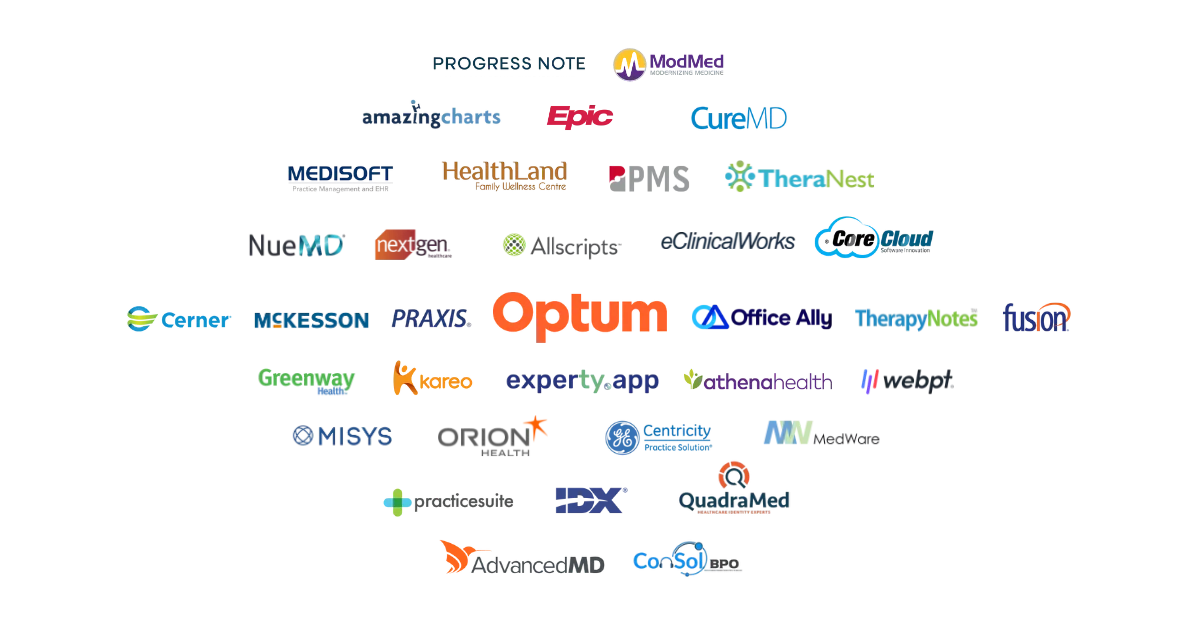
We work with Epic, athenahealth, eClinicalWorks, NextGen, Tebra (Kareo), AdvancedMD, DrChrono, and Meditech. No forced migration. No disruption to your current workflow.
Medicotech's free billing audit reviews your last 90 days of claims, names the codes costing you the most, and shows what to fix first, whether or not you hire us. Schedule a free consultation to see your numbers.
Frequently Asked Questions
What does a cardiology billing company do?
A cardiology billing company turns your clinical services into paid insurance claims. It verifies eligibility, obtains prior authorization, assigns CPT, ICD-10, and modifier codes, submits claims, appeals denials, posts payments, and bills patients. Cardiology adds its own complexity: professional and technical component splits, coronary artery modifiers on PCI, device monitoring cycles, and payer specific imaging authorizations. A specialist team knows those rules before the first claim leaves.
How much does cardiology billing cost in Pittsburgh?
Most outsourced billing companies charge a percentage of collections. Medicotech typically charges 4 to 8 percent depending on specialty and claim volume, with no setup fees and no long term contracts. You pay only when you get paid. Your rate depends on your case mix, because cath lab and device volume take more work than office visits. The free billing audit gives you a firm quote.
Which payers do you bill for Pittsburgh cardiology practices?
We submit claims to Medicare through Novitas, Highmark, UPMC Health Plan, Aetna, UnitedHealthcare, Cigna, Humana, and the Southwest zone Medicaid plans: AmeriHealth Caritas Pennsylvania, Highmark Wholecare, and UPMC for You. We check each payer’s current prior authorization list and portal before scheduling imaging or cath lab cases, because those rules change during the year.
What does CPT 93000 cover, and when do you bill it?
CPT 93000 covers a routine 12 lead electrocardiogram with tracing, interpretation, and report. Bill 93005 for the tracing alone or 93010 for the interpretation alone. Payers usually deny 93000 when it appears on the same day as a cardiovascular stress test (93015), because the stress test already includes the ECG monitoring. We catch that bundling before submission.
How do you prevent CO-197 and CO-50 denials on echo and nuclear studies?
We stop CO-197 by checking the payer’s authorization list at scheduling and saving the authorization number to the order. We stop CO-50 by matching the ICD-10 code to the payer’s medical policy before the claim leaves. If the clinical indication doesn’t meet policy, we flag it to your clinician before the test, not after the denial.
When do you use modifier 26 versus TC in cardiology?
Use modifier 26 when you bill only the physician’s interpretation, as hospital based cardiologists do. Use TC when you bill only the equipment, supplies, and technician. If you own the equipment and read the study in your office, bill globally with no modifier. The wrong choice triggers CO-4 denials or overpayment recoupment, so we set the logic by code and place of service.
Which EHR systems do you work with?
We work inside the EHR you already use, including Epic, athenahealth, eClinicalWorks, NextGen, Tebra (Kareo), AdvancedMD, DrChrono, and Meditech. You don’t migrate and you don’t change your clinical workflow. We also reconcile charges against your echo lab reports, cath lab logs, and device clinic notes, so services recorded outside the EHR still reach a claim.
How fast do you submit cardiology claims?
We submit claims within 24 hours of charge entry once documentation is complete. Speed matters because payers enforce timely filing limits, and Medicare’s limit is 12 months from the date of service. Late charge capture from cath labs and off site device clinics is a common cause of timely filing losses, so we reconcile those sources daily.
How long until my practice sees revenue improve?
You’ll usually see cleaner claims within the first billing cycle. Medicare pays clean electronic claims no sooner than 14 days after receipt, and commercial payers vary, so improved payments typically arrive in weeks 3 to 6. Days in A/R and denial rates take longer, often 60 to 90 days, because older claims either age out or need active follow up.