
Medical Billing Services in Pennsylvania That Cut Denials and Shorten A/R Days
Medical billing services in Pennsylvania cover claim scrubbing, coding review, electronic submission, payment posting, denial appeals, and A/R follow up for practices billing Highmark, Independence Blue Cross, UPMC Health Plan, Geisinger, Capital Blue Cross, and Pennsylvania Medical Assistance through HealthChoices. Medicotech runs that work for practices from Philadelphia to Erie. We hold a 96 percent clean claim rate across 100,000 plus processed claims and 50 plus specialties, and we bill under Pennsylvania rules, not a generic national template.
What do medical billing services in Pennsylvania cover?
A billing service takes every step between the finished visit note and money landing in your account. In Pennsylvania that means one more layer: matching each claim to the right payer rulebook before it ever leaves your practice.
Here is what we handle for a Pennsylvania practice:
- Eligibility and benefits verification before the visit, including HealthChoices MCO assignment and behavioral health carve out checks
- Charge entry and coding review against CPT, ICD-10, and payer specific modifier rules
- Pre submission scrubbing using edit sets built separately for Highmark, Independence Blue Cross, UPMC Health Plan, and Geisinger
- Electronic claim submission on CMS-1500 and 837P formats with clearinghouse rejection clearing inside 24 hours
- Payment posting and reconciliation from ERA and paper EOB, including contractual adjustment accuracy
- Denial management and appeals worked by payer, with Act 68 interest tracked on late clean claims
- A/R follow up on every bucket past 30 days, escalated through each payer’s own process rather than one shared queue
- Patient statements and balance support that keep your front desk out of collection calls
- Provider credentialing and enrollment with Pennsylvania commercial payers and Medical Assistance

Which laws apply to billing for medical services in Pennsylvania ?
Five rule sets govern most Pennsylvania medical billing: Act 68 prompt payment, Act 6 of the Motor Vehicle Financial Responsibility Law, the Workers Compensation Medical Cost Containment regulations, Medical Assistance and HealthChoices program rules, and the federal No Surprises Act paired with HIPAA. Each one changes something concrete about how you code, submit, or appeal a claim.
| Pennsylvania Rule | What It Requires | What It Means For Your Claims |
|---|---|---|
| Act 68, Quality Health Care Accountability and Protection Act 40 P.S. § 991.2166 and 31 Pa. Code § 154.18 | Licensed insurers and managed care plans pay clean claims within 45 days of receipt. Late payment carries 10 percent annual interest. | Track a 45 day clock on every clean claim. Participating provider contracts often shorten it to 30 days. Unpaid interest is collectable and most practices never ask for it. |
| Act 6, Motor Vehicle Financial Responsibility Law | Auto injury medical payments follow a Medicare based fee cap. Providers bill the insurer directly. | You cannot balance bill the patient for the remainder on a covered auto claim. Getting this wrong creates a compliance exposure on top of the lost revenue. |
| Workers Compensation Medical Cost Containment 34 Pa. Code §§ 127.101 and 127.153 | Most services cap at 113 percent of the applicable Medicare rate. The carrier has 30 days from a properly documented bill. | Bills need the correct LIBC forms attached or the 30 day clock never starts. After 30 days you can file a Fee Review with the Bureau. |
| Medical Assistance and HealthChoices | Pennsylvania Medicaid runs through five physical health HealthChoices zones with behavioral health carved out to county BH-MCOs. | The same patient can carry two managed care plans at once. Send the behavioral health claim to the physical health plan and it denies every time. |
| No Surprises Act and HIPAA (Federal, applies in Pennsylvania) | Good faith estimates for self pay patients, balance billing limits for out of network emergency and facility based care, and protected health information safeguards. | Your patient facing estimate process and your billing vendor's security posture both sit inside audit scope. |
Act 68 is the one Pennsylvania practices leave on the table. The 45 day deadline is enforceable and the Pennsylvania Insurance Department accepts provider complaints when a payer sits on clean claims. We log the receipt date on every submission so an Act 68 challenge has evidence behind it instead of a phone call and a guess.
One 2026 change matters for your prior authorization workflow. CMS-0057-F took effect on January 1, 2026 and requires impacted payers, including Medicaid managed care plans, to run standardized prior authorization APIs. Response times tighten and status becomes traceable. Practices still faxing pre authorization requests to HealthChoices plans are working against a system that now expects electronic submission.
Pennsylvania claims stall when a Highmark edit and an Independence Blue Cross edit get treated the same way.
Why does Pennsylvania's payer mix cause denials you won't see in other states?
Pennsylvania operates as four regional payer markets stitched into one state. A claim workflow built around a single dominant Blue plan falls apart the moment your practice takes patients across county lines.
Dual BCBS Licensees
Highmark holds western and central Pennsylvania while Independence Blue Cross holds Philadelphia/southeast. Separate networks, prior authorization portals, and appeal addresses.
✔ We route claims to correct regional BCBS portals and rules.UPMC Dual Role
In Pittsburgh, UPMC operates as both the dominant health system and a major insurer. Credentialing and contracting decisions carry weight that standard payer relationships don't.
✔ We streamline UPMC-specific credentialing and payer specs.Geisinger Dominance
Geisinger locks central Pennsylvania as a combined payer-provider system operating with its own specialized reimbursement rules and authorization frameworks.
✔ We ensure full compliance with Geisinger payer policies.HealthChoices Zones
Five PA Medicaid zones (Southeast, Southwest, Lehigh/Capital, New West, New East) run unique MCO lineups, while behavioral health routes to separate county-based plans.
✔ We separate physical and behavioral health claims per zone.Border Traffic Rejections
Border practices in Philly (NJ/DE) and Erie (OH/NY) face cross-state credentialing gaps that quietly park claims in hidden rejection buckets nobody opens.
✔ We audit and fix cross-state credentialing gaps proactively.Here’s the opinion, and we’ll defend it: most Pennsylvania practice managers overrate their EHR’s built in claim scrubber and underrate the territory split. The scrubber catches a missing modifier. It does not know that an Allentown patient’s HealthChoices behavioral health claim belongs at PerformCare and not at the physical health MCO printed on the front of the card. That single routing error produces a clean looking submission and a guaranteed denial, and we’ve watched it repeat across whole quarters of a practice’s A/R before anyone traced it.
The cost math is simple. If your practice bills 500 claims a month at an average allowed amount of 150 dollars, a 20 percent denial rate parks roughly 15,000 dollars a month in rework. Some of it comes back. The share that ages past a payer’s timely filing window never does.
Should you outsource medical billing services in Pennsylvania or keep billing in house?
Outsourcing wins on cost and coverage for most practices under 10 providers. In house wins when you already have a tenured certified biller and enough volume to keep them busy. Here is the honest comparison.
| Factor | In-House Billing | Outsourced to Medicotech |
|---|---|---|
| Cost Structure | Salary, benefits, payroll tax, billing software, clearinghouse fees, training. Fixed whether collections rise or fall. | Percentage of collections, typically 4 to 8 percent. Costs move with your revenue. |
| Coverage Risk | One biller out sick or resigning stops claim submission. Median billing tenure runs short. | A team covers your account. No single point of failure. |
| Pennsylvania Payer Depth | Strong on the plans your practice sees most. Thin on the rest. | Separate workflows for Highmark, IBX, UPMC Health Plan, Geisinger, Capital Blue Cross, and each HealthChoices zone. |
| Denial & Appeal Capacity | Appeals get worked after everything else. Aged claims slip past filing deadlines. | Dedicated denial specialists. Appeals filed inside each payer's window. |
| Coding Credentials | Depends entirely on who you hired. | CPC and CCS credentialed coders on every account. |
| Control & Visibility | Full control. Visibility only as good as your reports. | You keep your EHR and your data. Weekly KPI reporting by payer. |
| Compliance Load | You own Act 68 tracking, workers compensation fee schedule updates, and No Surprises Act estimates. | We track rule changes and adjust workflows. You approve. |
If your practice bills more than 500 claims a month and your denial rate sits above 10 percent, the arithmetic usually favors outsourcing before it favors another hire. Below that volume, a strong in house biller with a good scrubber can hold the line.
What does our Pennsylvania billing team do differently?
We build the payer map first, then touch claims. Every Pennsylvania engagement opens with a territory audit that separates Highmark, Independence Blue Cross, UPMC Health Plan, Geisinger, Capital Blue Cross, and your HealthChoices zone into distinct workflows with their own edit rules and appeal paths.
Denial prevention before submission
Most denials trace to five avoidable sources: eligibility gaps, coding mismatches, missing pre authorization, timely filing, and modifier errors. We check eligibility in real time at scheduling, apply payer specific edits before the claim leaves, and hold nothing in a pending bucket without a reason attached. Checking eligibility before the visit removes the largest single denial category in most Pennsylvania practices.
Coding that survives a payer audit
Our coders hold CPC and CCS credentials and code to documentation, not to a target. Undercoding costs you revenue every day. Upcoding costs you far more once.Our medical billing and coding team reviews specialty specific modifier use, bundling logic behind CO-97 denials, and medical necessity edits behind CO-50.
Appeals worked by payer, not by queue
A Highmark appeal and a HealthChoices MCO appeal need different documentation and go to different places. We work them separately, track each plan's appeal deadline, and resubmit corrected claims within 24 hours of the denial hitting the ERA.
Credentialing so revenue starts on time
An uncredentialed provider generates claims that deny for months. We handle credentialing with Highmark, Independence Blue Cross, and Pennsylvania Medical Assistance, keep CAQH attestations current, and start the process early enough that a new hire bills from week one.
Reporting you can act on
You get weekly numbers showing denial rate by payer, days in A/R, clean claim rate, and collection rate against charges. Not a PDF nobody opens. If Highmark denials spiked 6 points last week, you'll know which CPT drove it. Practices that want the full picture move to full cycle revenue cycle management support and hand off the reporting layer entirely.
A 20 percent denial rate on 500 monthly claims locks up around 15,000 dollars every month in rework.

What do medical billing services for small practices in Pennsylvania cost ?
We charge a percentage of collections, typically 4 to 8 percent depending on specialty and claim volume. You pay when you get paid.
- No setup fees and no implementation charge
- No long term contract lock in
- Free billing audit before any engagement starts
- Higher end of the range applies to specialties with heavy appeal work, including behavioral health, workers compensation, and pain management
- Lower end applies to high volume primary care and internal medicine with clean payer mixes
Compare that to the loaded cost of one in house biller in Philadelphia or Pittsburgh once you add salary, benefits, billing software, clearinghouse fees, and the productivity gap while a replacement learns your payers. Small practices in Pennsylvania often find the percentage model costs less and covers more. Billing built for small practices covers the staffing math in more detail.
How do you choose the best medical billing service in Pennsylvania?
Ask the questions that separate a Pennsylvania billing partner from a national vendor with a state page. If a company can’t answer these in a first call, keep looking.
- Which Pennsylvania payers do you work daily, and do you queue Highmark and Independence Blue Cross separately?
- How do you route behavioral health claims for HealthChoices members?
- Do you track the Act 68 45 day clock, and have you ever escalated to the Pennsylvania Insurance Department?
- What is your first pass rate and denial rate across your book, measured how?
- Which credentials do the people touching my claims hold, and can you verify them?
- Do you work my aged A/R during transition or only new claims?
- What does your reporting show me weekly, and can I see a sample?
- Will you sign a business associate agreement before I share any chart?
Two more that practices forget. Ask who owns the data if you leave. Ask what happens to your account when the person assigned to it takes vacation.

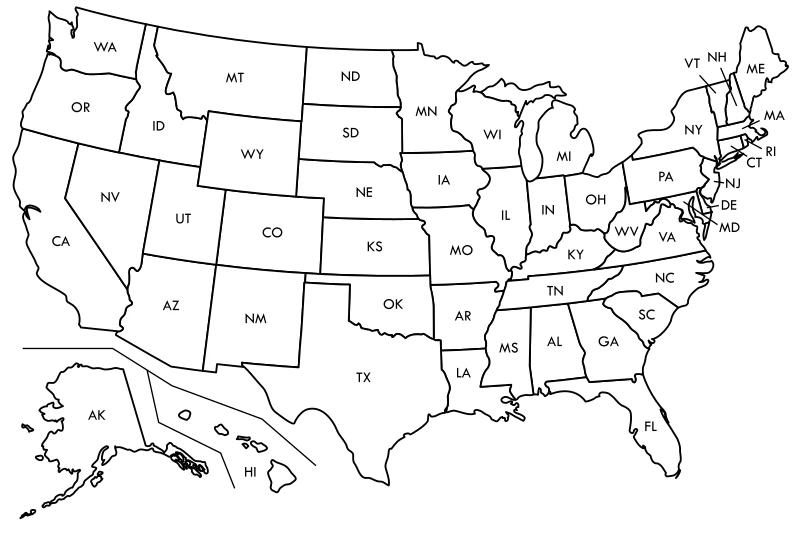
Which Pennsylvania cities and specialties do we bill for?
We serve practices statewide, with concentration in the metro areas where payer complexity runs highest: Philadelphia, Pittsburgh, Allentown, Harrisburg, Erie, Scranton, Reading, Lancaster, Bethlehem, and York.
Specialty coverage includes internal medicine, family medicine, cardiology, orthopedics, mental health and behavioral health, pain management, radiology, pathology, oncology, dermatology, OBGYN, pediatrics, gastroenterology, and physical therapy. Medicotech bills 50 plus specialties across all 50 states, so if your Pennsylvania practice has a second location in New Jersey or Ohio, one team handles both. See where else we work across the country.
Medicotech at a glance
- Founded: 2020
- Headquarters: St. Petersburg, Florida
- States served: All 50, including Pennsylvania
- Specialties served: 50 plus
- Claims processed: 100,000 plus
- Clean claim rate: 96 percent
- Client satisfaction: 98 percent
- Certifications: HIPAA compliant workflows, CPC certified billers, CCS certified coders
- Payment model: Percentage of collections, no setup fees
- Contact: hello@medicotechllc.com | 813-393-9744
Pennsylvania medical billing FAQ
How long does an insurer have to pay a clean claim in Pennsylvania?
Pennsylvania Act 68 requires licensed insurers and managed care plans to pay clean claims within 45 days of receipt, and payers that miss the deadline owe 10 percent annual interest. Participating provider contracts often shorten that window to 30 days. Workers compensation carriers run on a separate rule and have 30 days from a properly documented bill.
What laws apply to billing for medical services in Pennsylvania?
Five rules drive most of the work: Act 68 prompt payment, Act 6 of the Motor Vehicle Financial Responsibility Law for auto injury claims, the Workers Compensation Medical Cost Containment regulations at 34 Pa. Code Chapter 127, Medical Assistance and HealthChoices program requirements, and the federal No Surprises Act plus HIPAA. Each changes how a claim gets coded, submitted, and appealed.
What does medical billing cost for a small practice in Pennsylvania?
We charge 4 to 8 percent of collections depending on specialty and claim volume. No setup fees, no long term contract, and no charge for the initial audit. Practices with heavy HealthChoices or workers compensation volume usually sit at the higher end, because those claims need more appeal work per dollar collected.
Do you bill Highmark and Independence Blue Cross differently?
Yes. Pennsylvania runs two separate Blue Cross Blue Shield licensees in different territories. Highmark covers most of western and central Pennsylvania. Independence Blue Cross covers the southeast around Philadelphia. They keep separate networks, prior authorization portals, edit sets, and appeal addresses, so we work them as two distinct payers.
How long does it take to switch billing companies?
Most Pennsylvania practices move in 2 to 4 weeks. Week one covers EHR access, clearinghouse enrollment, and payer EDI agreements. Week two starts parallel claim submission while your existing A/R keeps getting worked. We don’t stop working aged claims during a transition, which is where practices lose the most money in a switch.
Which EHR systems do you work with?
Epic, Cerner, athenahealth, eClinicalWorks, NextGen, Kareo (Tebra), AdvancedMD, DrChrono, Practice Fusion, Greenway Health, Modernizing Medicine, and Meditech. You keep your current system and we log into it. No migration project and no data conversion.
Are you HIPAA compliant and do your coders hold certifications?
Medicotech runs HIPAA compliant workflows with signed business associate agreements, access logging, and encrypted transmission. Our coding staff holds AAPC and AHIMA credentials including CPC and CCS. We supply credential verification and our BAA before you send a single chart.