
Medical Billing Services in Ohio That Cut Denials and Speed Up Payments
Medicotech provides outsourced medical billing services for practices across Ohio, from Cleveland to Cincinnati to the smallest rural clinic in Appalachian Ohio. We handle charge entry, claims submission, payment posting, and denial management so your front desk stops chasing insurance companies and starts focusing on patients. Ohio practices face a specific mix of payer rules: a strict state prompt pay law, a 2026 update to how Medicare incident to billing works, and seven different Medicaid managed care organizations. We built our Ohio workflow around all three.
What Are Medical Billing Services in Ohio?
Medical billing services take a patient visit and turn it into a paid insurance claim. A biller captures the charges, a coder assigns the correct CPT and ICD-10 codes, and the claim goes out to Medicare, Medicaid, or a commercial payer like Anthem or Aetna. For Ohio practices, this also means checking claims against Ohio Administrative Code Chapter 5160, the state’s Medicaid billing rules, and Ohio’s own consumer protection laws before anything gets submitted.
What Laws Apply to Billing for Medical Services in Ohio?
Three layers of law govern how a claim gets billed and paid in Ohio: federal rules like HIPAA and the No Surprises Act, state rules like Ohio's Prompt Pay Law and House Bill 388, and payer specific rules from each Medicaid managed care plan. Miss one and a clean claim can still get denied, delayed, or flagged for audit.
Ohio's Prompt Pay Law
Ohio's Balance Billing Law, House Bill 388
HIPAA and the 2026 Incident-to-Billing Update

How Does Ohio Medicaid Managed Care Affect Your Billing?
Most Ohio Medicaid billing runs through a managed care organization, not the state directly. Seven plans currently cover Ohio’s Next Generation Medicaid program, and each one layers its own claim edits, timely filing window, and prior authorization list on top of the state’s base Medicaid rules.
The seven Next Gen managed care plans are Anthem Blue Cross and Blue Shield, AmeriHealth Caritas Ohio, Buckeye Health Plan, CareSource, Humana Healthy Horizons, Molina Healthcare of Ohio, and UnitedHealthcare Community Plan of Ohio. A member can pick any plan in any county, so an Ohio practice with a broad Medicaid panel is realistically billing against all seven at some point. Behavioral health for high acuity youth routes separately through OhioRISE, administered by Aetna, which carries its own authorization rules most practices do not expect the first time they see a denial for it
Running above a 10 percent denial rate is more common in Ohio than most practice managers realize this year.
Why Are Ohio Practices Outsourcing Medical Billing in 2026?
Denial rates are climbing everywhere
Three forces driving denials in 2026
Quantifying the monthly revenue leak
Front-loaded scrubbing and dedicated appeals
What About Medical Billing Services for Small Practices in Ohio?
A small Ohio practice, one or two physicians and a handful of staff, cannot absorb a biller quitting the way a large group can. Outsourcing to Medicotech means the eligibility check, the coding, the claim scrubbing, and the denial follow up happen the same way every week, whether your office manager is on vacation or not.
Solo and small group practices in Ohio run into the same handful of problems on repeat. Staff turnover hits hardest here: train a biller for a year, watch them leave for a hospital system job with better benefits, then start over. A single denied prior authorization can represent a real percentage of that week’s revenue when your patient volume is small. EHR platforms built for larger groups do not always export clean data for a two provider office, and front desk staff end up doing insurance verification, patient intake, and billing follow up in the same eight hour shift, which means something gets rushed.
You get a dedicated biller who learns your specialty, your payer mix, and your EHR. No hiring, no training, no coverage gap when someone calls in sick. Small practices on our billing support built for small practices pay less in a slow month, not a flat fee sized for a much bigger group.

Which EHR and Practice Management Systems Do We Work With in Ohio?
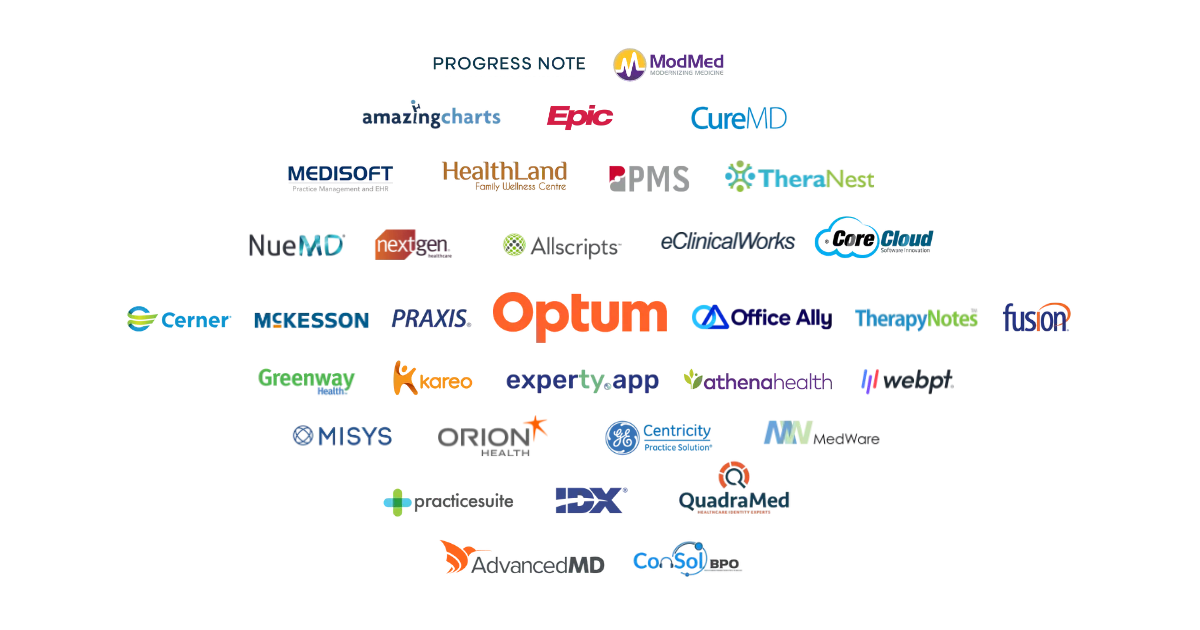
Ohio practices run everything from Epic at the hospital affiliated groups down to Kareo and AdvancedMD at small independent offices. Medicotech connects to your existing system instead of asking you to migrate. We currently support Epic, Cerner, athenahealth, eClinicalWorks, Kareo, AdvancedMD, DrChrono, NextGen, and Practice Fusion, among others. If you run something else, tell us during the free audit and we will confirm compatibility before you sign anything.
Your practice also touches our revenue cycle management workflow the moment a claim posts, since payment posting and A/R follow-up are where most Ohio denial patterns actually surface. If you serve practices in more than one state, our state-by-state billing guides cover the payer and compliance differences you will run into outside Ohio.
How Much Does Medical Billing Cost for Ohio Practices?
Medicotech charges a percentage of what we collect for your practice, typically 4 to 8 percent depending on your specialty mix and monthly claim volume. There is no setup fee and no long term contract. You do not pay us until the claim pays you, which lines up our incentive with yours instead of against it.
Every new Ohio account starts with a free billing audit. We pull your last 90 days of claims, show you exactly where the denials are coming from, and tell you honestly whether outsourcing would move the needle for your specific practice. Sometimes the answer is a smaller fix, not a full switch.
Ohio's prompt pay law gives you 30 days. Payer specific rules across seven Medicaid plans, a 2026 incident to billing update, and rising denial rates make it easy to lose track of which claims are actually clean before they go out.
Frequently Asked Questions
What is Ohio's prompt pay law for medical claims?
Ohio’s Prompt Pay Law, found in Ohio Revised Code sections 3901.38 through 3901.3814, requires health insurers and other third party payers to pay or deny a clean claim within 30 days of receiving it. The law bars payers from unnecessarily delaying claims and limits how far back they can go to recover an overpayment. Senate Bill 137 extended the same 30 day standard to Ohio Medicaid managed care organizations.
Do Ohio medical billing companies need to follow HIPAA?
Yes. HIPAA is federal law and applies to every medical billing company handling protected health information in Ohio or any other state. That means encrypted data transmission, access controls, audit logging, and a signed business associate agreement between the practice and the billing company. Medicotech operates as HIPAA compliant across every account, including every Ohio practice we bill for.
How much does medical billing cost for a practice in Ohio?
Most Ohio practices pay a percentage of collections, typically 4 to 8 percent, rather than a flat monthly fee. The exact rate depends on your specialty, claim volume, and how much of your billing needs rebuilding versus maintaining. Medicotech charges no setup fee and starts every new Ohio relationship with a free 90 day billing audit before you commit to anything.
Does Medicotech serve small practices in Ohio?
Yes. Medicotech’s model is built for solo and small group practices as much as larger multi location groups. A dedicated biller learns your specialty and payer mix instead of rotating through dozens of accounts, and percentage of collections pricing means a slow month costs you less, not the same flat fee regardless of volume.
Which Ohio Medicaid managed care plans does Medicotech bill for?
Medicotech bills against all seven Ohio Next Generation Medicaid managed care plans: Anthem Blue Cross and Blue Shield, AmeriHealth Caritas Ohio, Buckeye Health Plan, CareSource, Humana Healthy Horizons, Molina Healthcare of Ohio, and UnitedHealthcare Community Plan of Ohio. We also handle OhioRISE behavioral health claims and Next Generation MyCare Ohio claims for dual eligible patients.
What is Ohio's balance billing law, House Bill 388?
House Bill 388 bans balance billing for emergency services and for unanticipated out of network care delivered at an in network Ohio facility. Patients owe only their in network cost sharing amount, and the health plan pays the provider directly at a statutory rate or through arbitration. The law has applied since January 2022 and still governs Ohio out of network claims today.
How did the 2026 CMS incident to billing update affect Ohio practices?
As of January 1, 2026, CMS permanently allows direct supervision for incident to billing through real time audio and video instead of requiring the physician physically in the office suite. Ohio group practices running nurse practitioners or physician assistants across multiple locations can now bill incident to more flexibly, provided documentation still meets CMS’s other requirements for the supervising physician’s ongoing involvement.
How long does it take to switch medical billing companies in Ohio?
Most Ohio practices complete the switch in two to four weeks. Medicotech starts with the free billing audit, then runs your new claims in parallel with your outgoing biller for a short transition window so nothing falls through the gap. Full cycle transitions, meaning we also work your existing accounts receivable, typically take closer to 60 days.