
Provider Enrollment Services
We handle the Medicare and Medicaid enrollment mechanics, PECOS, the CMS-855 forms, NPI registration, and EFT setup, so your providers get billing privileges correctly the first time and start getting paid.

What are provider enrollment services?
Provider enrollment services handle the government and administrative steps that give a provider billing privileges with Medicare and Medicaid. That means obtaining the NPI, choosing and filing the correct CMS-855 form, submitting through PECOS, completing CMS-588 for electronic funds transfer, and working the application through the Medicare Administrative Contractor to approval. Enrollment is what turns a credentialed provider into one who can actually bill and get paid by government payers.
This is the paperwork layer of getting paid, and it’s unforgiving. Billing privileges don’t exist until CMS grants them, and CMS doesn’t grant them until every form, identifier, and signature lines up. One wrong form or one mismatched record, and the application bounces back weeks later.
Provider enrollment and credentialing, how they fit together
People search for provider enrollment and credentialing services together, and for good reason, you need both, but they’re different jobs. Credentialing verifies who the provider is. Enrollment registers that provider with a payer and switches on billing privileges.
On the commercial side, the paneling, contracting, and in network work lives on our insurance credentialing services page. This page is about the government enrollment mechanics, the PECOS filings, the 855 forms, the NPI and EFT setup that Medicare and Medicaid require. We handle the whole chain, and we keep the two halves coordinated so nothing falls between them.
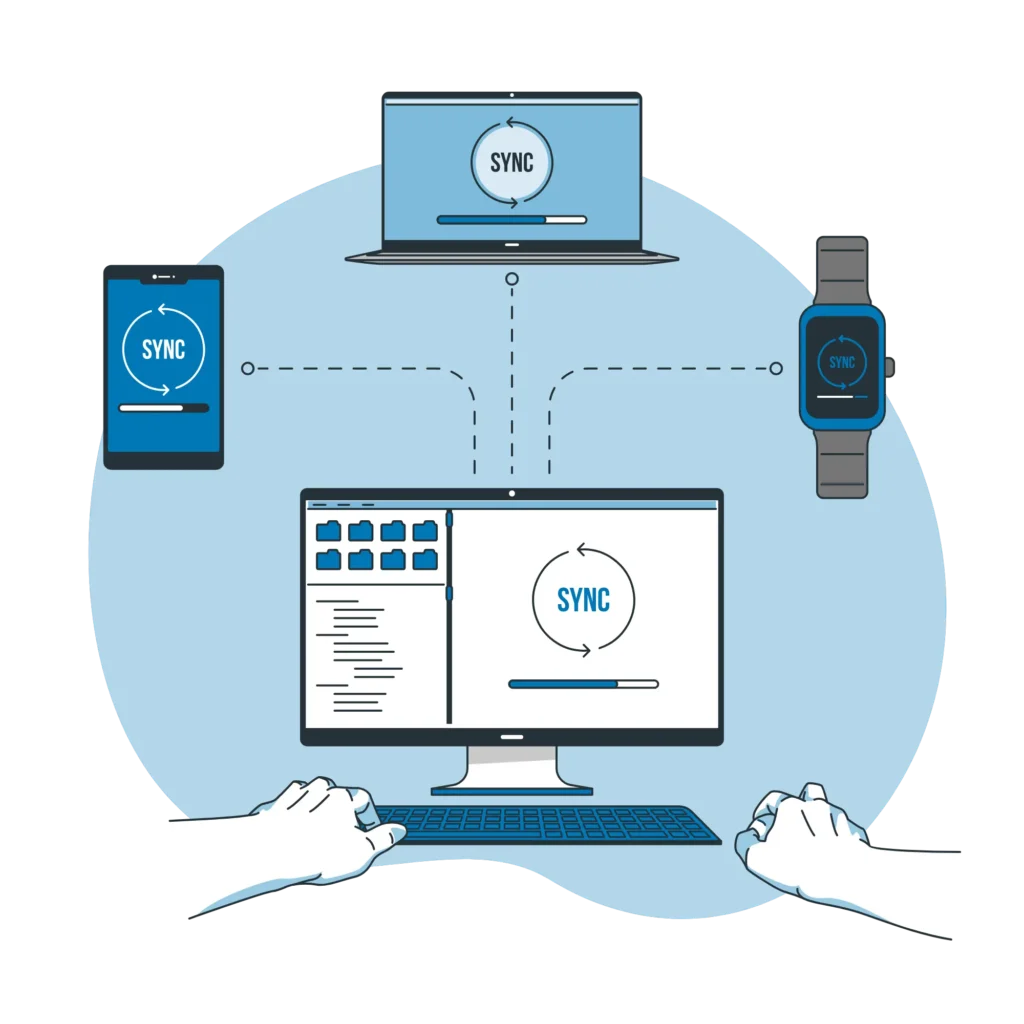
How does the Medicare provider enrollment process work?
Medicare enrollment runs as a sequence, and each step has to be right before the next one holds. Here's how we run it.
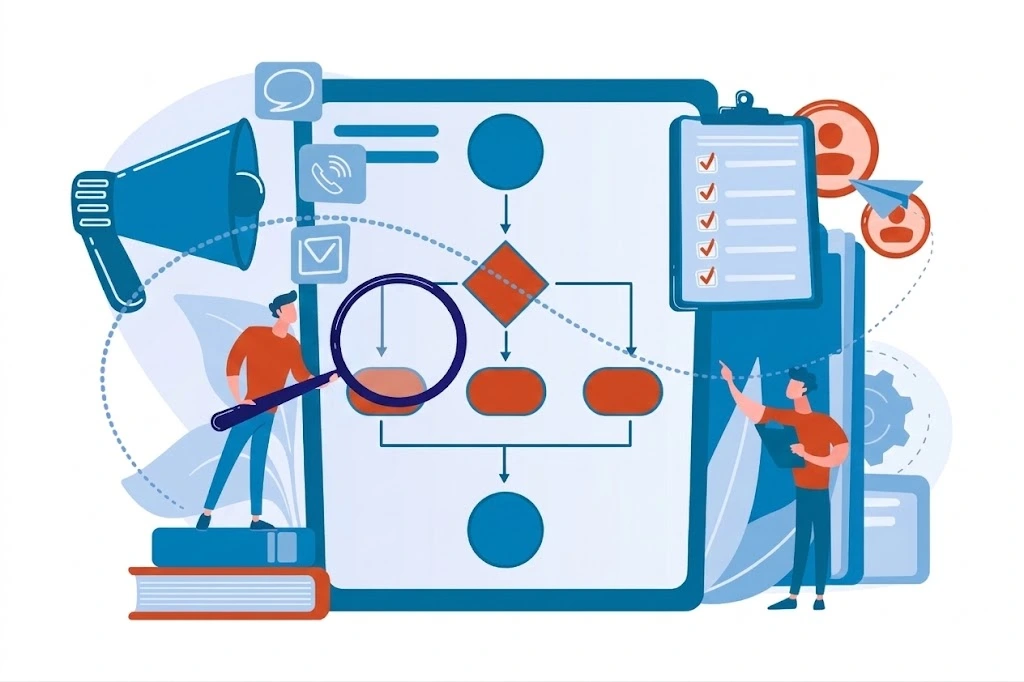
1. Confirm the NPI (Type 1 or Type 2)
Every provider needs an NPI before enrolling, issued through NPPES. We confirm the right type, individual or organizational, and make sure the NPPES record is accurate, because PECOS pulls straight from it.
2. Select the correct CMS-855 form
855I for individuals, 855B for groups, 855A for institutions, 855S for DMEPOS. The wrong form is the leading cause of instant rejection, so we match it to your tax structure first.
3. Build and submit in PECOS
We complete the application in PECOS, where validation blocks blank required fields, e-signatures replace wet ink, and you get real time status. A clean web submission moves faster than paper.
4. Set up EFT with CMS-588
We file the electronic funds transfer enrollment with a voided check or bank letter, so payments actually land once privileges are granted.
5. Work it through the MAC to approval
We track the application with the Medicare Administrative Contractor, answer any development request fast, and confirm the effective date and billing privileges.
How It Works From Chart to Clean Claim
MedicoTechLLC provides comprehensive medical coding services for physician practices, group practices, hospitals,
urgent care centers, and specialty clinics across the United States.v
Medicare Provider Enrollment
The full PECOS path to Medicare billing privileges, from NPI confirmation through CMS-855 filing, CMS-588 EFT, and MAC approval. We also handle reassignment of benefits, where an individual assigns billing rights to a group, which trips up a lot of in house filings.
Medicaid Provider Enrollment
Every state Medicaid program is its own system with its own portal and rules, and some run 6 months. We file the state specific application correctly and manage the prerequisites, like an in state license or active Medicare enrollment, that some states require first.
PECOS Enrollment
Most PECOS problems aren't technical, they're setup problems, and the biggest one is an NPPES mismatch that quietly breaks the application. We get the PECOS account, the data, and the NPPES record aligned before filing, then submit and track electronically.
Individual Provider Enrollment
The CMS-855I path for a physician or non-physician practitioner getting their own billing privileges. Even providers employed by a large system need their own enrollment, because Medicare ties the record to the individual's SSN and NPI, and we make sure that personal enrollment is clean.
Group Practice Enrollment
The CMS-855B path that establishes the organization's billing rights under a Type 2 NPI, plus linking each individual provider to the group and reassigning benefits. This is where multi provider onboarding goes wrong most often, so we manage the linkage end to end.
Commercial Payer Enrollment
Enrollment with commercial insurers so claims pay under the right provider and group. This overlaps with paneling, so we coordinate it with the contracting and in network work on the insurance credentialing side rather than duplicating it.
NPI Registration and Updates
New Type 1 and Type 2 NPI registration through NPPES, plus updates when anything changes. Because PECOS and every payer pull from NPPES, we keep that record accurate, since an outdated NPI record silently corrupts every enrollment built on it.
Why does Medicare reject PECOS applications?
PECOS rejects files fast, and almost always for the same handful of reasons. Knowing them is half the battle.
We align your PECOS, NPPES, and CAQH data before submission and select the correct action type, which is what prevents the silent rejections most providers run into.


What documents do you need for provider enrollment ?
Enrollment falls apart over paperwork that doesn’t line up. We run a full check up front so nothing stalls the file. The core set every provider needs:
- National Provider Identifier (NPI), Type 1 and Type 2 where applicable
- Current state license and DEA registration
- Practice Tax ID (TIN) and legal entity information
- Malpractice insurance certificate with current limits
- Board certification, medical education, residency, and fellowship records
- Social Security number and government ID for the individual provider
- Work history with no unexplained gaps, plus hospital and group affiliations
- Bank account details and a voided check for CMS-588 EFT setup
Payers ask for many of the same basics, but each adds its own wrinkles. We map the full set to each payer before filing so you’re not chasing a missing document three weeks in.
Common provider enrollment problems, and how we solve them
| Problem | Why it happens | How we solve it |
|---|---|---|
| Wrong CMS-855 form | Form doesn't match the tax structure or NPI type | Form selection matched to your entity before filing |
| NPPES mismatch | PECOS pulls from NPPES, and the records disagree | NPPES record aligned to PECOS before submission |
| Incomplete application | Missing data triggers a MAC development request | Complete, validated filing the first time |
| EFT setup errors | CMS-588 wrong, so payments stall after approval | CMS-588 filed correctly with bank documentation |
| Lost group linkage | Individual not reassigned to the group Type 2 NPI | 855B linkage and benefit reassignment handled |
| Late change reporting | 2026 rules shortened reporting to 30 days | Active monitoring and on time change filings |

The honest take: enrollment rewards boring discipline over cleverness. There's no trick that beats filing the right form, complete, with matching records, the first time. Most of the delays we fix for new clients trace back to a single wrong field nobody caught.
What changed for provider enrollment in 2026?
CMS tightened its enrollment authority effective January 1, 2026, and it changes how enrollments need to be managed:
Retroactive Revocation Authority
CMS can now revoke billing privileges retroactively in more situations, which raises the stakes on accurate, current records.
30-Day Reporting Window
Most adverse legal actions and enrollment changes now have to be reported within 30 days, down from longer windows.
Deactivation After 12 Months Idle
CMS can deactivate an enrollment that sits inactive for 12 months, so providers who enroll but don't bill can lose privileges.
The takeaway: enrollment is no longer a file it and forget it task. It needs monitoring, and that's part of what we do.

What does provider enrollment cost?
Transparent, flat pricing. No mystery rate cards.
- Per enrollment application: a flat fee per provider, per payer, whether Medicare, Medicaid, or commercial.
- Per provider bundle: a flat per provider rate covering Medicare plus the commercial payers a new provider needs.
- Group setup: 855B group enrollment and provider linkage quoted by group size.
- No setup fees. Month to month. Free enrollment audit first. Note that CMS may charge its own application fee for institutional and DMEPOS enrollments, which is separate from our service fee.
We quote the exact number after a free review of your providers, entity structure, and target payers.
Enrollment is one service in a larger program. It’s part of our medical credentialing services, and it works alongside insurance credentialing for commercial paneling and contracting, physician credentialing for the provider lifecycle, CAQH credentialing for the data profile payers pull from, and re-credentialing for revalidation. Once you’re enrolled and in network, our medical billing services keep the claims paid.
Provider enrollment as part of your full credentialing program

Provider Enrollment FAQs
What are provider enrollment services?
Provider enrollment services handle the government and administrative steps that give a provider billing privileges with Medicare and Medicaid. That means obtaining the NPI, choosing and filing the correct CMS-855 form, setting up and submitting through PECOS, completing CMS-588 for electronic funds transfer, and working the application through the Medicare Administrative Contractor to approval. Enrollment is what makes a credentialed provider able to actually bill and get paid by government payers.
What is the difference between provider enrollment and credentialing?
Credentialing verifies a provider’s qualifications, license, education, board certification, malpractice history. Enrollment is the administrative filing that registers the provider with a payer and grants billing privileges. With Medicare, enrollment runs through PECOS and the CMS-855 forms. Most payers credential first, then enroll. We handle both, and this page focuses on the enrollment mechanics that get you billing.
What is PECOS?
PECOS, the Provider Enrollment, Chain, and Ownership System, is the CMS web platform for Medicare enrollment. It’s the preferred path over paper CMS-855 forms because it processes faster, often around 7 to 15 days for a clean web submission versus roughly 14 or more for paper, uses built-in validation so required fields can’t be skipped, accepts electronic signatures, and offers real time status tracking. PECOS pulls provider data directly from NPPES, so the two have to match.
Which CMS-855 form do I need?
It depends on your structure. CMS-855I is for individual physicians and non-physician practitioners. CMS-855B is for clinics and group practices. CMS-855A is for institutional providers. CMS-855S is for DMEPOS suppliers. CMS-855O is for ordering and certifying providers who won’t bill. Choosing the wrong form is the leading cause of immediate MAC rejection, so we match the form to your tax structure and NPI type before filing.
What is the difference between a Type 1 and Type 2 NPI?
A Type 1 NPI is the individual provider’s personal identifier, tied to their SSN. A Type 2 NPI is the organizational identifier for a group, practice, or facility. An individual physician enrolls under a Type 1; a group bills under a Type 2 and links its providers to it. Both are issued through NPPES, and because PECOS pulls from NPPES, any error in the NPI record carries straight into the enrollment.
How long does Medicare provider enrollment take?
A clean PECOS submission generally processes in about 45 to 60 days, and applications needing a site visit or extra review can run 65 days or more. Web submission through PECOS is faster than paper. Completeness is the strongest factor in speed, since an incomplete application or an NPPES mismatch triggers a development request that resets the clock. We file complete to avoid that.
Do I need CMS-588 for electronic funds transfer?
Yes. Medicare payments require electronic funds transfer, set up through the CMS-588 form, usually with a voided check or bank letter. Errors in EFT setup delay your payments even after enrollment is approved, so getting it right is part of the job. We complete CMS-588 alongside the enrollment so the money flows as soon as billing privileges are granted.
What changed for Medicare enrollment in 2026?
Effective January 1, 2026, CMS expanded its enrollment authority. The CY 2026 final rule added retroactive revocation authority, shortened the reporting window for most adverse legal actions and changes to 30 days, and expanded CMS authority to deactivate enrollments after 12 months of inactivity. The practical effect is that reporting changes late, or letting an enrollment sit idle, now carries more risk, which makes active enrollment management more important than before.
Do you handle Medicaid enrollment too?
Yes. Each state runs its own Medicaid enrollment with its own portal, forms, and timelines, and some states take 6 months. Many states also require Medicare enrollment or an in state license first. We manage the state specific requirements and file each state’s application correctly, so you can serve Medicaid patients without the application stalling in a state queue.
Is Medicotech HIPAA compliant?
Yes. Every Medicotech enrollment specialist signs a HIPAA business associate agreement. Your provider data, SSN, and documents are handled in encrypted systems with role based access, and we keep audit logs of every submission. HIPAA is a regulation we comply with, not a certification anyone issues.
Ready to get your providers enrolled and billing?
Send us your provider list and entity structure. We'll audit where each enrollment stands, confirm the right forms and NPI setup, flag anything likely to trigger a rejection, and give you a realistic timeline to billing privileges. Free, no commitment.
Prefer email? hello@medicotechllc.com
Testimonials From Our Valued Clients
Posted on GoogleTrustindex verifies that the original source of the review is Google. Professional, responsive, and knowledgeable medical billing team. They have been a great support for our practiceLoad more