
CAQH Credentialing Services
We build, maintain, and monitor your CAQH Provider Data Portal profile, including the 120 day re-attestation, so payers always pull clean data and your credentialing never stalls. This directly supports faster approvals within our insurance credentialing services workflow.

What are CAQH Credentialing Services?
CAQH credentialing services build and maintain your profile on the CAQH Provider Data Portal, the central database that more than 900 health plans pull credentialing data from. The work covers profile setup, document upload, the 120 day re-attestation cycle, error resolution, and ongoing compliance monitoring. Because most payers credential straight from CAQH instead of separate applications, a clean, current profile is what keeps you in network and getting paid through structured insurance credentialing solutions processes.
Think of your CAQH profile as the foundation under your entire payer relationship. If the foundation has a crack, an expired document, a mismatched NPI, a lapsed attestation, everything built on top of it gets shaky. That’s why CAQH is the highest leverage thing to get right in all of credentialing.
What is CAQH and the CAQH Provider Data Portal?
CAQH stands for the Council for Affordable Quality Healthcare, a nonprofit that runs the Provider Data Portal, the platform formerly called CAQH ProView. It’s a free, centralized database where you enter your professional information once across roughly 18 data sections, then authorize payers to access it. Over 900 health plans use it, including Aetna, Cigna, UnitedHealthcare, Humana, and most Blue Cross Blue Shield plans.
The point of CAQH is to kill redundant paperwork. Instead of filling out a separate application for every insurer, you maintain one profile and the payers pull what they need. When that single source of truth is accurate, credentialing moves fast. When it’s stale, every payer that touches it stalls at once. If you treat insured patients, you need an active CAQH profile, there’s no way around it.
How It Works From Chart to Clean Claim
MedicoTechLLC provides comprehensive medical coding services for physician practices, group practices, hospitals,
urgent care centers, and specialty clinics across the United States.
CAQH Profile Setup
We complete the full registration, obtain or confirm your CAQH ID, and build out all 18 data sections correctly the first time. Setup errors cascade, because every payer downstream pulls from the same profile, so a mistake here becomes a credentialing problem everywhere. We get it clean from the start, with NPI, license, and name data consistent across every field.
CAQH Profile Management
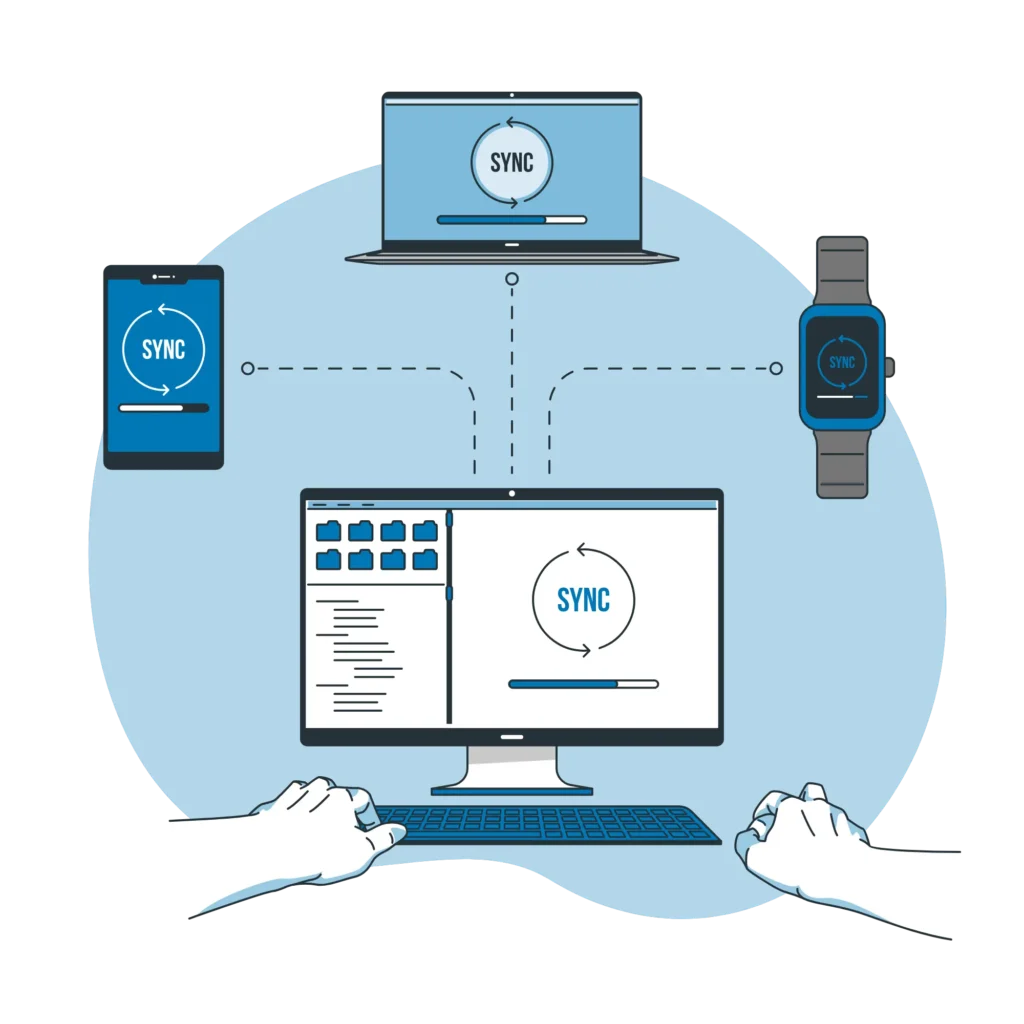
Your profile isn't a set and forget document. Practice locations change, licenses renew, malpractice policies update, and each change has to be reflected in CAQH before a payer notices the gap. We keep the profile current as your practice evolves, so payers never pull outdated data.
CAQH Re-Attestation
Every 120 days you have to log in and confirm your information is current, whether or not anything changed. This is the deadline providers miss most, and missing it makes your profile inactive to payers. We track the date and re-attest on time, every cycle, so your profile never goes dark.
CAQH Document Upload and Maintenance
Missing or expired documents stop credentialing cold. We upload and keep current every required file, your license, DEA certificate, malpractice certificate of insurance, W9, and board certifications, and we flag expirations before they lapse rather than after a payer rejects the profile.
CAQH Error Resolution
If your credentialing keeps stalling and you can't see why, the cause is often buried in CAQH. We audit the profile against payer requirements, find the data mismatches, incomplete sections, and expired files, correct them, and re-attest. Cleaning the profile clears holds you may not have known were CAQH related.
CAQH Compliance Monitoring
We monitor the profile continuously, watching attestation dates, document expirations, and data accuracy, and we make sure changes don't accidentally trigger problems. Updating a practice location wrong, for example, can read to a payer as a termination, so monitoring catches issues before they cost you network status.
How does the CAQH credentialing process work?
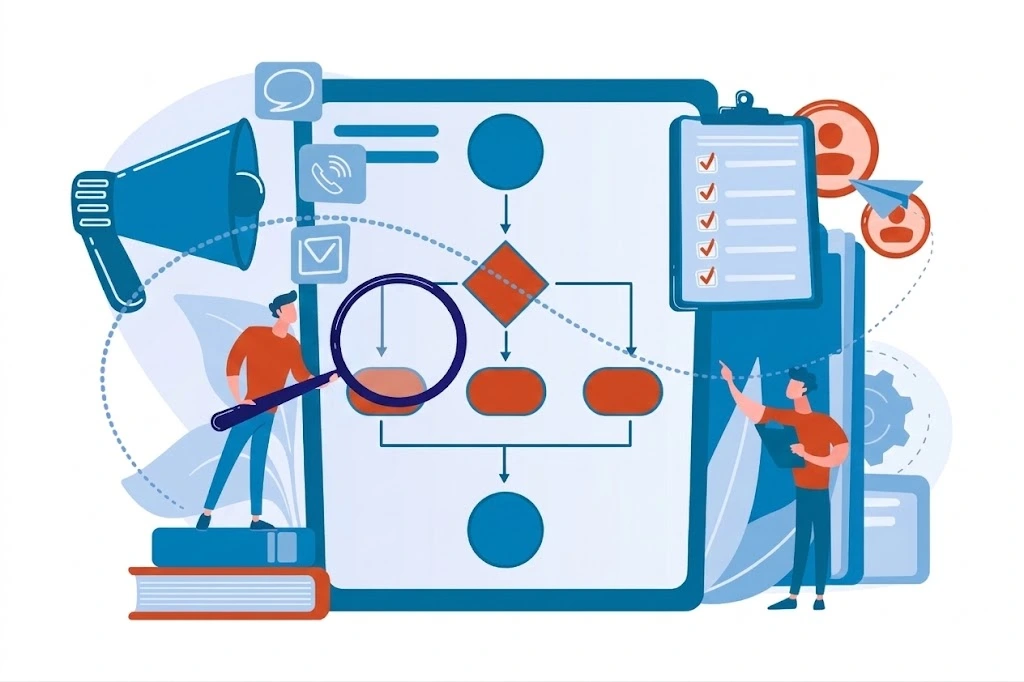
From a new profile to an active, payer ready status, CAQH runs in four stages. We handle every one.
1. Registration and profile setup
We create or access your CAQH account, confirm your CAQH ID, complete all 18 data sections, and upload your license, DEA, malpractice, and other required documents.
2. Verification and attestation
We run the first attestation and make sure every field is consistent with your supporting documents, so the data holds up when a payer pulls it.
3. Payer authorization
We authorize the payers you work with to access the profile, which is what lets each insurer credential you from your CAQH data instead of a separate application.
4. Ongoing re-attestation and monitoring
Every 120 days we re-attest, refresh expiring documents, and monitor for errors, so your profile stays active and payer ready without you tracking a single deadline.
CAQH Credentialing for individual providers and groups
The work scales differently depending on whether we're managing one profile or fifty.
Individual Provider CAQH
For a solo physician, nurse practitioner, therapist, or physician assistant, we set up and maintain a single profile end to finish, so an independent provider gets the same discipline a large group would have in house. You carry none of the deadline tracking.


Group and Delegated CAQH
For multi provider practices, we centralize every provider’s CAQH profile under one tracked system, keep them all current and re-attested on schedule, and support delegated credentialing arrangements where the group holds authority. One dashboard, every provider, no profile slipping through a gap during onboarding or turnover.
The CAQH mistakes that quietly cost providers money
Most CAQH damage is self inflicted and invisible until a claim denies. Here's what we watch for, and how we prevent each.
| CAQH mistake | What it causes | How we prevent it |
|---|---|---|
| Missed 120 day re-attestation | Profile goes inactive, payers may read it as a termination | Central deadline tracking, re-attest on time every cycle |
| Expired documents | Credentialing stops until the file is replaced | Expiration alerts and document refresh before the lapse |
| Deleting a practice location | Payer treats it as a termination, leads to de-credentialing | Locations updated, never removed unless intended |
| Data mismatches | NPI or name inconsistencies stall payer verification | Consistency check across every field and document |
| Incomplete sections | Payer can't credential from a partial profile | All 18 sections completed and validated |


Transparent pricing, with no surprises.
- New profile setup: a one time flat fee covering full registration, all 18 sections, document upload, and the first attestation.
- Ongoing management: a low monthly fee per provider covering 120 day re-attestation, document upkeep, and compliance monitoring.
- Bundled with credentialing: when we handle your payer credentialing, CAQH management is usually included.
- No setup fees beyond the profile build. Free CAQH audit first.
We quote the exact number after a free review of your current CAQH status.
What does CAQH credentialing cost?
We’ll quote the exact number after we see your provider count, payer list, and current credentialing status. No generic rate cards.
CAQH is the data engine under everything else in credentialing. It’s part of our provider credentialing solutions, and it feeds directly into payer enrollment, insurance paneling services, physician credentialing for new providers, and re-credentialing for renewals. Once your profile is clean and your providers are in network, our medical billing and coding services keep the claims paid.
CAQH as part of your full credentialing program

CAQH Credentialing FAQs
What is medical credentialing?
Medical credentialing is the process of verifying a provider’s qualifications (education, training, licensure, board certification, malpractice history, work history) and enrolling them with insurance payers so the provider can bill and get paid. It’s a two part process: credentialing verifies who the provider is, enrollment gets them contracted with specific payers.
How long does credentialing take?
Typical timeline is 90 to 120 days per payer. Medicare via PECOS runs 40 to 60 days. Commercial payers average 90 to 120. Medicaid can extend to 180 days in some states. Behavioral health and multi state groups can run longer. A clean application submitted first time cuts the timeline by weeks. An incomplete application can add months.
How much does outsourcing credentialing cost?
Most US practices pay between 150 and 350 dollars per payer application, or a flat per provider bundle of 800 to 2,500 dollars covering 8 to 15 payers. Re-credentialing is typically 75 to 150 dollars per renewal. Medicotech offers flat fee and bundled pricing. We quote the exact number after reviewing your payer list and provider count.
How much revenue does a credentialing delay cost?
Industry data puts daily billable revenue at 5,000 to 15,000 dollars for specialists and around 1,200 dollars for primary care. A 90 day credentialing delay can cost 100,000 to 1.5 million dollars per provider depending on specialty. MGMA has reported credentialing delays cost new physicians up to 25 percent of their first year earnings. Most of that revenue is permanently lost because commercial payers rarely backdate effective dates.
What's the difference between credentialing and enrollment?
Credentialing is the verification step: confirming the provider’s education, licensure, board certification, DEA, malpractice, and work history. Enrollment is the payer specific step: getting the provider contracted and loaded into a payer’s network so claims can be paid. Most payers require credentialing to happen before enrollment. We handle both in parallel where we can, sequentially where we must.
Do you handle CAQH, PECOS, and NPI applications?
Yes. We build and maintain CAQH ProView profiles (the central record most commercial payers pull from). We handle PECOS for Medicare enrollment. We apply for NPI Type 1 (individual) and NPI Type 2 (organization). We manage DEA registrations and renewals, CLIA certifications for labs, and state licensing applications.
What documents are required to start credentialing?
Current medical license, DEA registration, NPI, board certification (if applicable), malpractice insurance certificate, CV or resume with complete employment history, government issued ID, medical school diploma, residency and fellowship certificates, CME records, work history with references, background check, immunization records, and any active hospital privileges. Each payer may request additional items.
How often does re-credentialing need to happen?
Most commercial payers re-credential every 2 to 3 years. Medicare requires revalidation every 5 years (every 3 years for DMEPOS suppliers). CAQH requires re-attestation every 120 days. Medicotech tracks every renewal date in a central calendar and starts the process 90 days before expiration so there’s no gap in billing eligibility.
Do you handle telehealth and multi state credentialing?
Yes. Telehealth credentialing requires state licensing and payer enrollment in every state where patients are seen. We track the Interstate Medical Licensure Compact, state telehealth rules (which changed after 2023), and payer specific telehealth enrollment requirements. Multi state groups are our second largest client segment.
Can you help negotiate payer contract rates?
Yes. Once credentialing is complete and a payer offers an in network contract, we review the proposed fee schedule against regional benchmarks and your top CPT codes. We request rate increases on underpaid services and flag clauses (auto renewal, termination notice, silent PPO language) that warrant negotiation. We can’t guarantee a rate increase, but we can make sure you don’t sign a contract worse than your peers.
How can I track progress?
You get a weekly status report for every provider, every payer. The report shows current stage (documentation, CAQH, PSV, submitted, under review, approved, contracted), expected next step, any blockers, and a forecasted first-bill date. We also give you a dedicated credentialing manager as a single point of contact, reachable by email or phone during business hours.
Is Medicotech HIPAA compliant?
Yes. Every Medicotech credentialing specialist signs a HIPAA business associate agreement. Provider documents are stored in encrypted systems with role based access. We keep audit logs of every application submission and never store sensitive documents on local devices.
Ready to get your CAQH profile clean and keep it that way?
Send us your CAQH status, or your provider list if you're starting fresh. We'll audit the profile, flag expired documents and approaching attestation deadlines, and tell you exactly what's holding up your credentialing. Free, no commitment.
Prefer email? hello@medicotechllc.com
Testimonials From Our Valued Clients
Posted on GoogleTrustindex verifies that the original source of the review is Google. Professional, responsive, and knowledgeable medical billing team. They have been a great support for our practiceLoad more