
Medical Billing Services in North Carolina That Cut Denials and Get You Paid Faster
Medical billing services in North Carolina handle the full claim lifecycle for your practice: eligibility verification, charge entry, coding review, claim submission, payer follow up, denial appeals, and patient statements. Medicotech does that work for practices in all 100 North Carolina counties. We bill Blue Cross NC, Carolina Complete Health, Healthy Blue, UnitedHealthcare, Aetna, Cigna, and Medicare Part B through Palmetto GBA, and we hold a 96 percent clean claim rate across more than 100,000 processed claims.
What do medical billing services in North Carolina cover?
They cover every step between a patient walking in and money landing in your account. Nothing about that list is unique to North Carolina. What changes state to state is the payer mix, the filing windows, and the rules your claims get judged against.
Here is what we run for North Carolina practices:
- Eligibility and benefits verification before the visit, including NC Medicaid plan assignment checks
- Pre authorization tracking against each payer’s current list
- Charge entry and coding review by CPC certified coders
- Claim scrubbing against payer specific edits, then electronic submission on the 837P or CMS-1500
- ERA and EOB posting, including secondary and crossover claims
- Denial management: root cause, corrected claim, appeal, and payer follow up inside the filing window
- Patient statements and a billing help line your front desk can hand calls to
- Weekly KPI reporting on clean claim rate, denial rate, days in A/R, and net collection rate
Need coding handled separately from billing? Our medical coding services run as a standalone engagement for practices that already have a biller in house.

What do medical billing services in North Carolina cover?
Because a claim can be technically correct and still get denied. Your scrubber checks format. It doesn’t check whether Blue Cross NC changed a policy six weeks ago, or whether your patient moved from a Standard Plan to a Tailored Plan in March.
Picture a two provider family medicine office in Greensboro. Front desk verifies eligibility on Monday for a Thursday visit. Patient’s Medicaid plan changes in between. Claim goes out clean, comes back denied for eligibility, and lands in a spreadsheet that somebody says they’ll get to. Six weeks later that claim is still sitting there. Nobody did anything wrong. The money just leaked.
Run your own numbers. At 500 claims a month and 150 dollars average allowed amount, a 1 in 5 first pass denial rate puts 15,000 dollars a month into rework. Some of it comes back. The rest quietly ages past a filing limit.
Where the leaks usually start
- Eligibility gaps. NC Medicaid plan churn is real, especially after expansion added more than 600,000 adults to the rolls. Verify at scheduling and again at check in.
- Pre authorization misses. Physicians report roughly 13 hours a week on prior authorization work. Miss one and the denial is unappealable in some contracts.
- Coding mismatches. CO-50 lands when the payer says the service wasn’t medically necessary as coded. That’s usually a documentation and modifier problem, not a clinical one.
- Timely filing. The 365 day NCTracks wall feels far away until an aged claim hits it.
- Nobody working the denial queue. This is the big one. Most practices submit well and follow up poorly.
Stopping the leak takes two things: catching errors before submission through insurance verification services, and working every denial to resolution instead of to a spreadsheet.
Which payers do North Carolina practices bill most?
North Carolina has one dominant commercial carrier and a Medicaid landscape that reorganized itself in 2026. If your billing partner doesn’t know the difference between a Standard Plan and a Tailored Plan, you’ll feel it in your denial report.
| Payer | Position in North Carolina | What Trips Claims Up |
|---|---|---|
| Blue Cross and Blue Shield of North Carolina | Only marketplace carrier in all 100 counties, above 60 percent individual market share and roughly 82 percent of the fully insured large group market. | Policy updates that outpace your scrubber, plus BlueCard out of state claims. |
| Carolina Complete Health | Largest NC Medicaid plan after absorbing WellCare of North Carolina on April 1, 2026. Serves more than 980,000 members across Medicaid, Medicare, and Marketplace. | Split billing across the merger date, portal access for former WellCare only contracts. |
| Healthy Blue, UnitedHealthcare Community Plan, AmeriHealth Caritas of NC | Remaining NC Medicaid Standard Plans. | Plan specific prior auth lists and separate provider portals. |
| Alliance Health, Partners Health Management, Trillium Health Resources, Vaya Health | The four Behavioral Health and I/DD Tailored Plans, serving roughly 240,000 members. | Claim routing. Vaya and Alliance pay their own claims. Carolina Complete Health has processed physical health claims for Trillium and Partners. |
| Medicare Part A and Part B | Administered by Palmetto GBA as the A/B MAC for Jurisdiction M, covering NC, SC, VA, and WV. | LCD coverage rules, eServices enrollment gaps, crossover routing to Medicaid. |
| NC Medicaid Direct | Fee for service population billed through NCTracks. | 365 day filing limit, EFT requirement, checkwrite timing. |
| Aetna, Cigna, Ambetter, Oscar Health | Regional commercial and marketplace coverage. Aetna exited the NC individual exchange for 2026. | Narrow HMO and EPO networks, out of network denials. |
How did the Carolina Complete Health and WellCare merger change NC Medicaid billing ?
On April 1, 2026, WellCare of North Carolina merged into Carolina Complete Health, and the combined plan now operates statewide under the Carolina Complete Health name. Your contract carried over automatically. Your claim routing did not stay the same. What this means for your billing calendar:
Post-April 1 Claims Processing
Dates of service on or after April 1, 2026 process under Carolina Complete Health.
Pre-April 1 Claims Routing
Dates of service before April 1, 2026 still follow the originating agreement. WellCare claims from that period submit through existing electronic pathways, including Availity with WellCare payer ID 14163.
Portal Access & Login Fixes
Practices that held a WellCare Medicaid contract and nothing else hit provider portal login failures right after go live. A fix deployed April 3, 2026, but historical claim activity for those practices got delayed in the meantime.
Obstetric Care Billing
Obstetric care spanning the merger date bills to the payer tied to the delivery date, not the first antepartum visit.
Medicare Coverage Continuity
Medicare members stay under the WellCare banner with the same ID.
We flagged this one because it’s the most common source of avoidable NC Medicaid denials we’ve seen in 2026, and almost no billing company website mentions it. If your A/R shows a cluster of rejections dated late spring, this is the first place to look.
Your North Carolina denials are trackable.

What do medical billing services for small practices in North Carolina include?
The same work a large group gets, minus the assumption that you have three people to spare. Small practices in North Carolina carry a specific problem: one biller, and when that biller takes a vacation or leaves, your revenue cycle goes with them.
For practices with one to five providers we run:
- A named biller assigned to your practice, plus a backup who already knows your payer mix
- No minimum claim volume and no flat monthly retainer
- Provider enrollment and re credentialing support with NC payers, handled through our credentialing team so a new hire starts billing on schedule instead of 120 days late
- Direct work inside your EHR, so your front desk workflow doesn’t change
- A weekly scorecard short enough that you’ll actually read it
An opinion, since you’re evaluating vendors: most small practice owners overrate their EHR’s built in claim scrubber and underrate denial follow up speed. The scrubber catches format errors, which are the cheap ones. The expensive denials are policy denials, and those need a human who reads payer bulletins. Ask any billing company you’re considering how many denials per biller they carry. If they can’t answer, that’s your answer.
More detail on scope and pricing sits on our page built for practices with one to five providers.
What laws apply to billing for medical services in North Carolina ?
Three layers govern your claims: the North Carolina prompt pay statute, the NC Medicaid Managed Care contract terms, and federal rules including HIPAA, the No Surprises Act, and Medicare policy through CMS. Here's what each one actually requires.
This is the statute worth knowing by number. Under N.C.G.S. 58-3-225, an insurer has 30 calendar days after receiving a claim to pay it or send notice of denial, of inadequate proof of loss, or of pending status.
- 18% Interest: Late payments carry 18 percent annual interest starting the day after the claim should have been paid.
- 60-Day Status Reports: If a claim sits unpaid and undenied past 60 days, the insurer owes a status report every 30 days while unresolved.
- 90-Day Info Limit: Unanswered information requests force a denial at 90 days, reopening if provided within 1 year.
- 2-Year Recovery Window: Pursue underpayments and nonpayments with interest for up to two years post-adjudication.
- Jurisdiction Rule: Follows the insurer's license—NC-licensed payers must comply even if your billing office is out of state.
NC Medicaid runs on separate timelines from commercial payers, and they are tighter than most staff assume:
- Timely Filing: NCTracks must receive most claims within 365 days of DOS (last DOS for inpatient/nursing care).
- Secondary/Crossovers: Granted 180 days from the Medicare or third-party EOB posted date.
- Clean Claim Response: Health plans must flag missing info within 18 days; clean claims pay or deny within 30 days.
- Mandatory EFT: Claims without valid EFT on file suspend for 45 days, then face outright denial.
- Checkwrite Gaps: Runs 50 weeks/year with no checkwrites the week of June 30 or Christmas week.
House Bill 434, the CARE FIRST Act, cleared the North Carolina House 109 to 1 on April 29, 2025. It would tighten utilization review timelines under G.S. 58-50-61, require North Carolina licensed physicians to review denials, and cut the number of services requiring prior authorization.
As of July 2026, it sits in Senate committee. It is not law. Don't rebuild your authorization workflow around it yet, but track it closely—the compliance lift lands on payers, while the operational upside lands on you.
- HIPAA: Governs how claim data moves securely and who touches it.
- No Surprises Act: Limits balance billing for emergency care and out-of-network clinicians at in-network facilities.
- Medicare / Palmetto GBA: Administered locally by Palmetto GBA, including local coverage determinations (LCDs) specific to Jurisdiction M. CMS regulations remain the source of record in disputes.
*Note: We are a medical billing company, not a law firm. This summary outlines operational billing workflows. Consult a healthcare attorney before making legal compliance decisions.
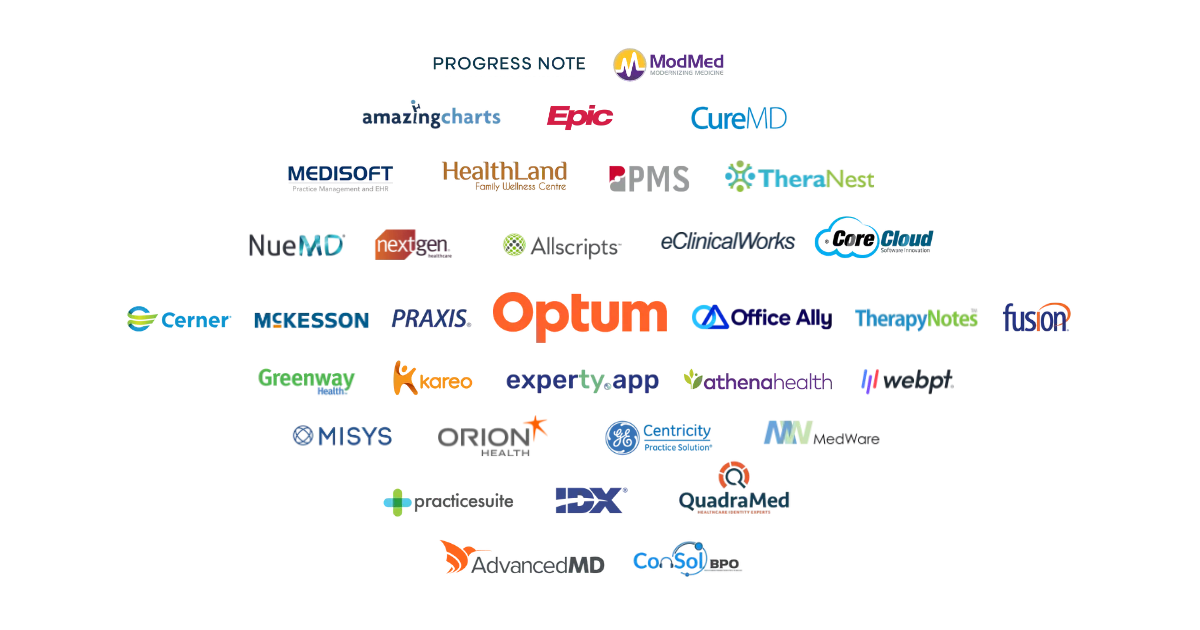
Which EHR systems do we work with?
Yours. We log into your existing system rather than forcing a migration, and we’ve worked claims in Epic, Cerner, athenahealth, eClinicalWorks, NextGen, Kareo (Tebra), AdvancedMD, DrChrono, Practice Fusion, Modernizing Medicine, Greenway Health, ChiroTouch, Meditech, and Netsmart.
If your system isn’t on that list, tell us during the audit call. We’ve onboarded plenty of practices running software we hadn’t touched before, and the setup work sits on our side, not yours.

How much do medical billing services cost in North Carolina?
Medicotech charges a percentage of collections, typically 4 to 8 percent, set by your specialty, claim volume, and payer mix. Behavioral health and surgical specialties land higher because the claim work is heavier. Straightforward primary care lands lower.
- No setup fees
- No long term contract
- No charge on money we don’t collect
- Free billing audit before anything is signed
Compare that against in house cost honestly: a billing salary plus benefits, clearinghouse fees, software, training, and the productivity gap every time someone leaves. Our breakdown of medical billing costs runs the full comparison with real line items.
What happens in your first 30 days with Medicotech ?
- Free billing audit. We pull your last 90 days of claims and report denial rate by payer, days in A/R, first pass rate, and where the money is stuck.
- Payer and credentialing check. We confirm every provider is active with Blue Cross NC, the Medicaid plans in your region, and Palmetto GBA before the first claim goes out.
- System access and workflow mapping. We get into your EHR, document how charges reach billing today, and fix the handoff points that drop claims.
- Aged A/R triage. Old claims get sorted by recoverability and filing deadline, then worked hardest where the window is closing.
- First weekly scorecard. You see clean claim rate, denial rate, and days in A/R against your baseline, every week from that point on.
Statewide coverage for every specialty we handle sits on our medical billing services hub, and you can compare North Carolina against other states we serve on the state by state billing coverage page.

Frequently asked questions about medical billing services in North Carolina
How much do medical billing services in North Carolina cost?
Medicotech charges a percentage of collections, typically 4 to 8 percent depending on your specialty, claim volume, and payer mix. There are no setup fees and no long term contracts. You pay when you get paid. A free billing audit runs before any engagement so you see the numbers first.
Which insurance payers do you bill in North Carolina?
We bill Blue Cross and Blue Shield of North Carolina, Carolina Complete Health, Healthy Blue, UnitedHealthcare Community Plan, AmeriHealth Caritas of NC, the four Tailored Plans, NC Medicaid Direct through NCTracks, Medicare Part A and Part B through Palmetto GBA, plus Aetna, Cigna, Ambetter, and Oscar Health.
What is the timely filing limit for NC Medicaid claims?
NCTracks must receive most NC Medicaid claims within 365 days of the first date of service. Inpatient hospital and nursing facility claims run 365 days from the last date of service. Secondary and crossover claims carry a 180 day window from the primary payer EOB posted date.
Did the Carolina Complete Health and WellCare merger change where I send Medicaid claims?
Yes. WellCare of North Carolina merged into Carolina Complete Health on April 1, 2026. Dates of service on or after that day go to Carolina Complete Health. Earlier dates of service still follow the originating WellCare agreement. Existing provider contracts carried over without new paperwork.
What laws apply to billing for medical services in North Carolina?
The main state rule is the prompt pay law at G.S. 58-3-225, which gives insurers 30 calendar days to pay a claim or send notice, and applies 18 percent annual interest to late payments. NC Medicaid adds its own filing and prompt payment terms. HIPAA, the No Surprises Act, and CMS Medicare rules apply on top.
Do you work with small practices in North Carolina?
Yes. Solo providers and practices with two to five clinicians make up a large share of our client base. There is no minimum claim volume. You get a named biller who knows your payer mix rather than a rotating queue, and pricing scales with collections instead of a flat retainer.
Do I have to change my EHR to work with Medicotech?
No. We work inside your existing system, including Epic, Cerner, athenahealth, eClinicalWorks, NextGen, Kareo (Tebra), AdvancedMD, DrChrono, Practice Fusion, Modernizing Medicine, Greenway Health, and ChiroTouch. No migration, no export project, no change to how your front desk works today.
Is Medicotech HIPAA compliant?
Yes. We operate under HIPAA compliant workflows, sign a business associate agreement before any protected health information moves, and restrict claim data access to your assigned billing team. Our coders hold CPC certification from AAPC and our coding leads hold CCS credentials.
How long before a North Carolina practice sees results?
Most practices see first pass acceptance move within the first two checkwrite cycles. Aged A/R takes longer, because old claims need appeals, payer calls, and sometimes reconsideration filings. Plan on 60 to 90 days for a clear trend in denial rate and days in A/R.
Ready to stop leaving revenue on the table?
Every week a North Carolina claim sits unworked, it moves closer to the 365 day NCTracks wall or a commercial filing limit, and the older it gets the harder it is to collect. Medicotech handles submission, payer follow up, and appeals so your A/R stops aging quietly in a spreadsheet. Book a free billing audit and a dedicated specialist will review your last 90 days of claims.
- Eligibility Verification – Confirm coverage quickly to reduce front-end denials.
- HIPAA-Aligned Security – Patient data handled with strict privacy and security controls.
- End-to-End Claim Handling – From submission to payment posting and A/R follow-up.
- Denial Management & Appeals – Proactive corrections and appeals to recover missed revenue.
- Real-Time Claim Visibility – Track progress and performance with clear reporting.
No long-term contracts required • Fast onboarding • Transparent reporting