
Gastroenterology Medical Billing Services That Cut Denials and Protect Colonoscopy Revenue
Gastroenterology medical billing services handle the coding, claims submission, denial management, and accounts receivable follow up for GI practices performing colonoscopies, upper endoscopies, ERCP, and related procedures. Medicotech’s CPC and CPB certified billers manage your full revenue cycle, from insurance verification before the visit to the final appeal on a denied claim. We built this service around the two things that hurt gastrointestinal (GI) practices the most: screening claims that convert to diagnostic mid procedure, and coding rules that change every January.
Why Is Gastroenterology Billing Harder Than Other Specialties?
Gastroenterology runs on procedure volume, and procedure volume runs on precise documentation. A single colonoscopy can start as a screening and end as one of three different billable events, depending on what the physician finds and removes. Get any one of those decisions wrong, the code, the modifier, or the diagnosis link, and the claim comes back. Our medical coding services help GI practices maintain accurate procedure coding and documentation.
Most specialties bill a handful of stable codes month after month. Your practice doesn’t get that luxury. Between screening conversions, multiple procedure reductions, anesthesia coordination, and pathology tied to nearly every biopsy, gastroenterology carries more decision points per encounter than almost any other outpatient specialty. Payer specific bundling rules and prior authorization requirements haven’t even entered the picture yet.
Here’s where GI practices typically lose revenue:
- Screening colonoscopies that convert to diagnostic mid procedure without the right modifier swap
- NCCI bundling edits on same session colonoscopy and biopsy combinations
- Prior authorization gaps on capsule endoscopy, motility studies, and advanced imaging
- Anesthesia and pathology charges billed separately from the procedure they support
- Documentation that doesn’t specify removal technique (forceps versus snare versus ablation)
- Payer specific rules on multiple procedure reductions during the same encounter
- Credentialing delays for new associates that push billable procedure days into unpaid limbo
Most GI practices put their energy into scheduling and procedure volume, and not enough into the single claim type that quietly costs them the most: the screening that turns diagnostic. If your practice runs more than a few endoscopy days a week, that one conversion rule probably affects your bottom line more than any other coding decision your team makes. For help reducing claim errors and follow-up work, see our Denial Management Services.

What Changed in Gastroenterology Billing and Coding for 2026?
2026 brought some of the most consequential coding changes gastroenterology has seen in years. Here's what actually affects your claims:
CPT 43889 Update
Endoscopic sleeve gastroplasty now has its own permanent code, CPT 43889, replacing the unlisted procedure code many practices used before.
Anorectal Physiology Codes
Two older anorectal physiology codes, 91120 and 91122, were deleted and replaced with 91124 and 91125 to reflect updated testing standards.
Code G2211 Integration
The new add-on code G2211 can be reported with outpatient E/M visits for patients you manage longitudinally, including IBD, hepatitis C, and cirrhosis.
2026 Adjustments
The 2026 Physician Fee Schedule applies a 2.5 percent efficiency adjustment to foundational endoscopy codes while shifting office vs. facility payment dynamics.
Conversion Factors
CMS now uses two separate conversion factors. Clinicians in qualifying alternative payment models get a higher rate, while everyone else bills against $33.42.
Gastroenterology MVP
CMS finalized a dedicated MIPS reporting pathway for the specialty, the Gastroenterology Care MVP (M1422), focusing on relevant quality measures.
One coding mistake we see constantly this year: billers hunting for a dedicated MASLD or MASH code because that's the terminology gastroenterologists now use in the chart. ICD-10-CM hasn't created one yet. Fatty liver disease still codes to K76.0, and nonalcoholic steatohepatitis still codes to K75.81, with MASLD and MASH listed as applicable terms under those same codes. Get this wrong and your team wastes time searching for a code that doesn't exist instead of using the one that's already there.








Which CPT and HCPCS Codes Does Medicotech Bill for Your GI Practice?
GI coding covers a wide range of diagnostic and therapeutic work. Here are the codes our coders work with most often:
| Procedure | CPT Code(s) | Why it matters for billing |
|---|---|---|
| Upper GI endoscopy (EGD), diagnostic | 43235 | Base diagnostic code, bundled into any EGD family code once an intervention happens |
| EGD with biopsy, single or multiple | 43239 | Replaces 43235 whenever tissue is sampled, regardless of sample count |
| Colonoscopy, diagnostic | 45378 | The default screening/diagnostic base code, drops out the moment a polyp is removed |
| Colonoscopy with biopsy | 45380 | Used whenever any tissue sample is taken, not just polyp removal |
| Colonoscopy, polyp removal by hot biopsy forceps | 45384 | Typically used for diminutive polyps under 5mm |
| Colonoscopy, polyp removal by snare technique | 45385 | Most common conversion code from a screening colonoscopy |
| Colonoscopy with ablation of a polyp or lesion | 45388 | Includes pre/post dilation and guide wire passage when performed |
| Colonoscopy with endoscopic mucosal resection | 45390 | Higher complexity code and a frequent payer audit target |
| ERCP, diagnostic | 43260 | Base ERCP code, almost always billed with additional intervention codes |
| Medicare screening colonoscopy, high risk / average risk | G0105 / G0121 | Medicare's own screening codes, not 45378; wrong code = instant denial |
| Capsule endoscopy, esophagus through ileum | 91110 | Meaningfully higher reimbursement than routine E/M; common prior auth target |
We also handle the codes that don’t show up on this list as often: FIT and FIT DNA screening tests, liver elastography, motility and manometry studies, and the anesthesia and pathology charges that ride alongside most of your procedure days. If it’s billable and it’s gastroenterology, our coders have seen it.
Turning a screening colonoscopy into a diagnostic claim is one of the most common places GI billing goes sideways.
How Do You Bill a Screening Colonoscopy That Turns Diagnostic?
Here’s a scenario every GI billing team runs into on a weekly basis. A patient comes in for a routine screening, billed as 45378. The physician finds and removes a polyp with a snare, and the code shifts to 45385. Now the modifier has to shift too, and which modifier applies depends entirely on the payer. For help preventing coding-related claim denials, see our Denial Management Services.
For Medicare patients, that claim needs modifier PT. For commercial and Medicaid patients, it needs modifier 33. Miss the swap, and you’ve either billed a screening code for work that was actually diagnostic, or billed a diagnostic claim without the modifier that protects the patient’s preventive benefit. Since 2022, federal rules require that a colonoscopy which started as a screening keep its zero cost sharing status for the patient even after the code changes to reflect a polypectomy. Getting this wrong doesn’t just risk a denial. It risks an unexpected bill landing on your patient’s desk.
| Years | Medicare coinsurance the patient owes |
|---|---|
| 2023 through 2026 | 15 percent |
| 2027 through 2029 | 10 percent |
| 2030 and beyond | 0 percent, fully covered |
That phase down schedule comes from the Removing Barriers to Colorectal Cancer Screening Act, and it means the coinsurance your Medicare patients owe on a converted screening colonoscopy keeps shrinking every few years. Your billing team needs to apply the current rate correctly today, not the rate that applied two years ago. AGA’s screening colonoscopy coding guidance is a useful reference if your staff wants to see the payer logic firsthand.
What Does Medicotech Actually Do for Your Gastroenterology Revenue Cycle?
We verify active coverage before the visit, not after. For scheduled procedures like capsule endoscopy or advanced motility studies, we confirm prior authorization requirements ahead of time so your front desk isn't scrambling the morning of the procedure.
Our CPC and CPB certified coders match CPT and ICD-10 codes to your documentation, apply modifiers 59, 51, 26, PT, and 33 correctly, and flag charts where the documentation doesn't support the code before the claim ever goes out.
Every claim gets scrubbed against payer specific edits before submission. Clean claims move through electronic data interchange the same day they're ready, which is part of why our first pass acceptance rate stays high.
When a claim comes back, we don't just resubmit it and hope. We review the denial reason, pull the supporting documentation, and file an appeal built around the specific reason the payer gave, whether that's a missing modifier, an NCCI bundling edit, or a request for medical necessity records.
You get visibility into days in A/R, clean claim rate, and procedure level trends, so you can see where revenue is moving and where it's stuck without digging through a spreadsheet yourself.
Outsource GI Medical Billing & Credentialing to Medicotech
Your practice performs the procedures. We make sure you get paid for them correctly the first time, without your staff spending Friday afternoons on hold with payers.
Credentialing & Privileging
A GI practice adding a new associate, interventional endoscopist, or motility specialist faces complex timelines. We handle payer enrollment, CAQH maintenance, and hospital or ASC privileging so new provider volume generates immediate revenue.
Certified GI Coding & Verification
Medicotech's revenue cycle management team pairs certified GI coding with active insurance eligibility verification and hands-on denial management services, preventing claims from stalling out.
Nationwide Practice Support
We currently support gastroenterology practices in Florida and across all 50 states, backed by a certified GI medical coding team and broader billing solutions for multi-specialty practices under one partner.
Which EHR and Practice Management Systems Do We Work With?
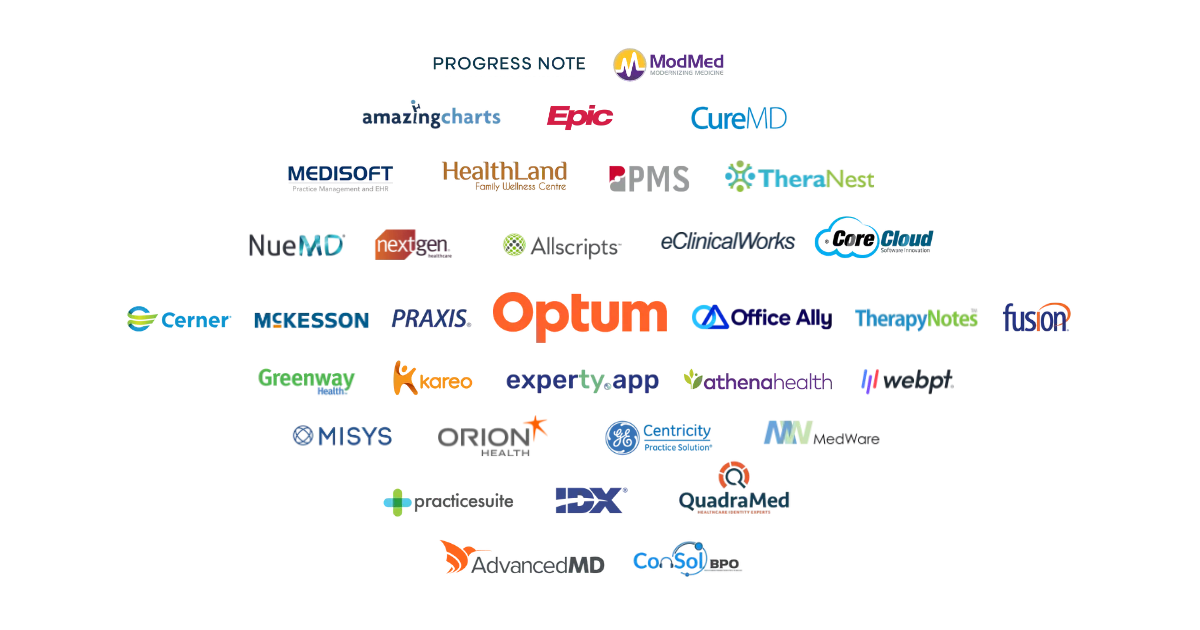
We work inside your existing system. No forced migration, no disruption to how your front desk already operates. Our billers are experienced across:
- eClinicalWorks
- CareCloud
- athenahealth
- AdvancedMD
- TruBridge
- NextGen Healthcare
- Kareo
- Epic Systems
Should Your GI Practice Handle Billing In House or Outsource It?
In-house billing gives you direct control, and it also means you own every training cost, every turnover gap, and every coding update your staff has to learn on their own. Outsourcing trades some of that control for a team that’s already current on this year’s modifier rules and already certified in gastroenterology-specific coding. You can also explore our Revenue Cycle Management Services to streamline claims, payments, and follow-up.
| Feature | In House Billing | Outsourced to Medicotech |
|---|---|---|
| Coding expertise | Depends on staff training and turnover | CPC and CPB certified GI coders |
| 2026 coding updates | Your team researches and implements them | Already built into our workflow |
| Screening to diagnostic conversions | Manual tracking, higher error risk | Modifier logic checked before submission |
| Staffing risk | Hiring, training, and turnover fall on you | No hiring or training burden |
| Cost structure | Fixed salaries and overhead regardless of volume | Tied to what you actually collect |
Neither path is automatically wrong for every practice. A high-volume group with a stable, experienced billing team might do fine in-house. A practice that’s grown faster than its back office, or one that keeps losing staff to turnover, usually sees the fastest return from outsourcing. Practices can also review the CMS Medicare Claims Processing Manual to understand the billing and coding requirements that staff must keep up with.
Denials on colonoscopy, EGD, and ERCP claims usually trace back to one of three things: a coding mismatch, a missing modifier, or a documentation gap that never made it back to your billing team. Medicotech's certified GI billers close that gap for you, from eligibility checks through appeals.
Frequently Asked Questions
What does gastroenterology medical billing include?
Gastroenterology medical billing covers insurance verification, CPT and ICD-10 coding, claims submission, denial management, and patient billing for GI specific procedures. That includes colonoscopy, upper endoscopy, ERCP, capsule endoscopy, and related diagnostic testing. A gastroenterology billing service also tracks payer specific rules for screening versus diagnostic claims, since that distinction affects both reimbursement and what the patient owes.
How is gastroenterology billing different from general medical billing?
Gastroenterology billing involves more coding decision points per encounter than most specialties. A single colonoscopy can shift from a screening code to a diagnostic code mid procedure depending on what the physician finds, and the modifier requirements change based on payer type. General medical billing rarely deals with that level of same visit code volatility.
What happens when a screening colonoscopy turns into a diagnostic procedure?
The CPT code changes from the screening base code, 45378, to a therapeutic code like 45385 or 45384 depending on how the polyp was removed. Medicare claims need modifier PT, while commercial and Medicaid claims need modifier 33. Since 2022, the patient keeps zero cost sharing on the converted claim, so the modifier has to be correct for that protection to apply.
Do you bill for ERCP, capsule endoscopy, and other advanced GI procedures?
Yes. We bill the full range of gastroenterology procedures, including ERCP, capsule endoscopy, EUS, motility and manometry studies, liver elastography, and therapeutic colonoscopy work like polypectomy and ablation. We also handle the anesthesia and pathology charges that typically accompany these procedures.
What is the Gastroenterology Care MVP and does it affect my billing?
The Gastroenterology Care MVP, M1422, is a CMS MIPS reporting pathway built specifically for GI practices. It lets you report on a focused set of quality measures, including adenoma detection rate through GIQIC26, instead of unrelated measures. Your MIPS performance affects future Medicare Part B payment adjustments, so accurate reporting matters for your bottom line.
How do you code NAFLD or MASLD diagnoses correctly?
MASLD and MASH are the clinical terms gastroenterologists use now, but ICD-10-CM has not created distinct codes for them yet. Fatty liver disease still codes to K76.0, and nonalcoholic steatohepatitis still codes to K75.81, with MASLD and MASH listed as applicable terms under those codes. Our coders code to the classification that exists, not the terminology trend.
Which EHR and practice management systems do you support for GI practices?
We work inside eClinicalWorks, CareCloud, athenahealth, AdvancedMD, TruBridge, NextGen Healthcare, Kareo, and Epic Systems, among others. Our billers fit into your existing workflow instead of asking your practice to migrate platforms.
How much does outsourcing gastroenterology billing cost?
Medicotech charges a percentage of collections rather than a flat fee, so our cost scales with what you actually collect. There are no setup fees and no long term contracts. We also offer a free billing audit before you commit, so you can see where your current claims stand first.
How long does it take to switch to Medicotech from an in house team?
Most GI practices complete the transition within a few weeks. We start with a billing audit of your current claims and A/R, set up payer connections and clearinghouse access, and run a short overlap period before your team hands off billing entirely. We coordinate the timeline around your procedure schedule so claims don’t fall through the gap.