
Neurology Medical Billing Services That Cut EEG and EMG Denials
Neurology medical billing covers the full revenue cycle for neurological care: EEG and long term video EEG monitoring, EMG and nerve conduction studies, Botox for chronic migraine, infusion therapy for MS and myasthenia gravis, and evaluation and management visits for epilepsy, stroke, and Parkinson’s disease. Medicotech handles verification, coding, claim submission, denial management, and patient statements for neurology and neurosurgery practices in all 50 states. Our AAPC and CCA certified coders know the difference between a global EEG code and a split billed one, because in neurology, that distinction decides whether a claim pays correctly or pays wrong without ever denying.
What a Missed Modifier Actually Costs Your Practice
Bill the global EEG or EMG code when a hospital owns the equipment, or bill the professional-only code when your practice owns it, and the claim usually does not deny. It pays. Just at the wrong rate, with no rejection to flag the error and nothing to appeal.
Illustrative example, not a specific client result: industry estimates put the cost of a missed technical and professional split at 50 to 200 dollars per study. A practice running 100 or more EMG and nerve conduction studies a month can lose tens of thousands of dollars a year this way, and never see a single denial that points to why.
Medicotech’s coders confirm equipment ownership and place of service before every EEG, EMG, and NCS claim leaves our system, so the split is right the first time instead of getting caught in an audit two years later. That discipline is part of why our clients see a 96 percent clean claim rate across the specialties we bill, backed by coders holding AAPC and CCA certification and more than 100,000 processed claims.
This isn’t a problem generic billing software solves on its own. Most practice managers overrate their clearinghouse’s edit checks and underrate how often a wrong-but-accepted modifier slips straight through them. Medical Billing and Coding Services can help ensure equipment ownership, place of service, and coding details are reviewed before claims are submitted.






Why Do Neurology Claims Get Denied More Than Other Specialties?
Therapeutic Exercise & Manual Work
Physical therapy billing relies heavily on timed codes (such as 97110 and 97140) governed by the 8-minute rule, requiring exact documentation of face-to-face treatment minutes to prevent unbundling flags and claim rejections.
Plan of Care & Re-Certifications
Commercial payers and Medicare enforce strict limitations on treatment intervals. Every plan of care and subsequent re-certification must be signed off by the physician on time to secure continuous coverage for extended therapies.
Assistant & Modifier Compliance
Modifiers like GP, GO, and KX indicate outpatient physical, occupational, or speech therapy plans exceeding statutory thresholds, ensuring appropriate threshold tracking and mitigating automatic denials.
Therapy Assistant Service Reductions
Payer rules mandate proper tracking of services delivered in part by physical therapy assistants (PTAs) or occupational therapy assistants (OTAs) using modifiers CQ/CO to align with federal payment reductions.
Medical Necessity & Functional Progress
Insurers frequently challenge therapy claims for lack of documented functional progress. We tie objective measurement tools directly to clinical notes to substantiate medical necessity and conquer authorization denials.
See how our medical billing services work, or book a free 90 day claims review to find out what you're currently losing.
Preventing the Denial Codes That Hit Neurology Hardest
Four denial codes account for most of the rejected neurology claims we see when a new practice switches to us.
| Denial Code | Description & Clinical Context |
|---|---|
| CO-97 | Service bundled into another billed procedure, usually EMG billed alongside NCS without the correct add on code |
| CO-50 | Medical necessity not established, often an EEG ordered without a specific diagnosis code supporting it |
| CO-18 | Duplicate or frequency limit exceeded, typically a repeat EEG billed inside a payer's lookback window without documented clinical change |
| CO-11 | Diagnosis inconsistent with procedure, common when an NCS claim is missing nerve by nerve detail in the documentation |
We build pre submission scrubbing around these four patterns specifically, because catching them before submission is faster and cheaper than appealing them after.
How Medicotech's Neurology Billing Process Works
Here’s what happens between a patient visit and a posted payment.
We verify active coverage before the visit, not after. For scheduled procedures like capsule endoscopy or advanced motility studies, we confirm prior authorization requirements ahead of time so your front desk isn't scrambling the morning of the procedure.
Our CPC and CPB certified coders match CPT and ICD-10 codes to your documentation, apply modifiers 59, 51, 26, PT, and 33 correctly, and flag charts where the documentation doesn't support the code before the claim ever goes out.
Every claim gets scrubbed against payer specific edits before submission. Clean claims move through electronic data interchange the same day they're ready, which is part of why our first pass acceptance rate stays high.
When a claim comes back, we don't just resubmit it and hope. We review the denial reason, pull the supporting documentation, and file an appeal built around the specific reason the payer gave, whether that's a missing modifier, an NCCI bundling edit, or a request for medical necessity records.
You get visibility into days in A/R, clean claim rate, and procedure level trends, so you can see where revenue is moving and where it's stuck without digging through a spreadsheet yourself.
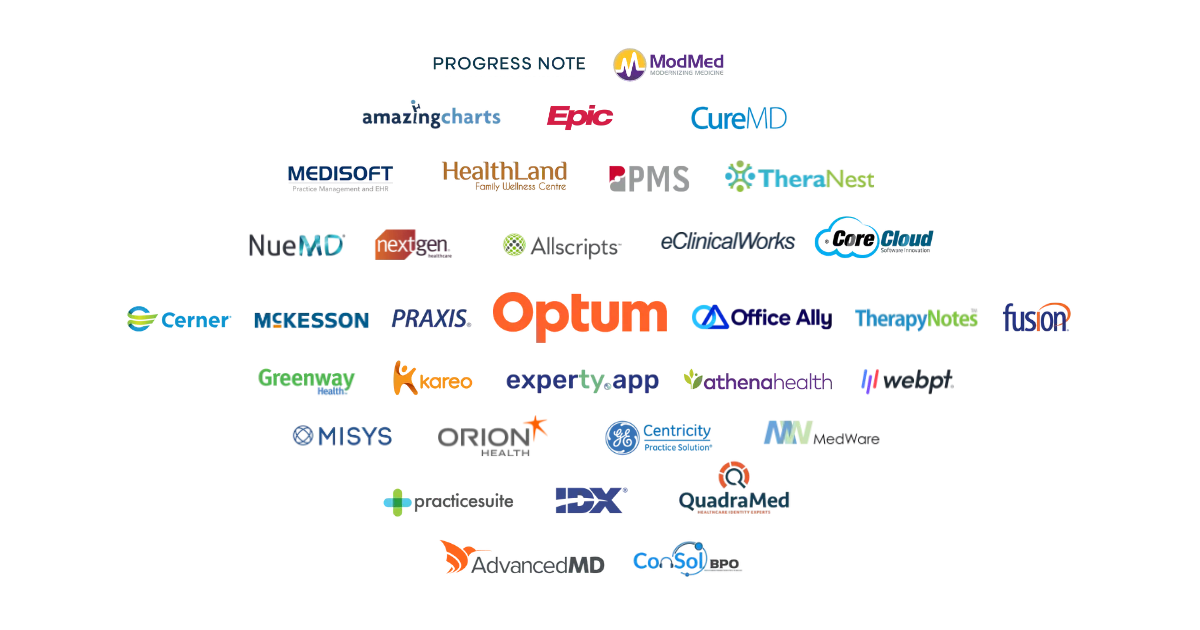
Which EHR Systems We Support for Neurology Practices
We integrate with your existing EHR. No forced migration and no disruption to how your front desk and clinical staff already work.
Epic · Cerner · Meditech · Kareo (Tebra) · AdvancedMD · DrChrono · Practice Fusion · athenahealth · eClinicalWorks · NextGen · Modernizing Medicine · Greenway Health
Comprehensive Neurology Medical Billing Services
From specialized diagnostics to complex infusion therapies, we streamline your workflows so your neurology practice maintains total visibility and maximal reimbursement month after month.
Diagnostics & Testing
Expert billing for EEG and long term video EEG monitoring (including epilepsy monitoring unit studies), alongside precise nerve by nerve EMG and nerve conduction study coding.
Therapeutics & Injections
Specialized management for chemodenervation and Botox for chronic migraine, alongside infusion therapy billing for MS, myasthenia gravis, and migraine prevention drugs with full J-code accuracy.
Authorizations & Verification
Proactive prior authorization handling for CGRP migraine therapies, advanced MRI sequences, extended EEG monitoring, and mandatory insurance verification before every single patient visit.
Specialized Appeals & Denials
Neurology-specific denial management and rigorous appeals targeting complex payer guidelines, ensuring claim blockages are permanently resolved at the root cause.
Chronic Care & Panels
Comprehensive chronic care management (CCM) billing optimized for specialty patient panels including epilepsy, multiple sclerosis, Parkinson's disease, and ALS.
Credentialing & A/R Support
Payer enrollment and physician credentialing for neurologists and neurosurgeons, backed by thorough patient statements and structured accounts receivable follow-up.
How We Charge for Neurology Billing
We charge a percentage of collections, typically 4 to 8 percent depending on your practice’s volume and procedure mix. No setup fees, no long term contract, and no charge for a billing audit before you sign anything. You pay only when you get paid, which means our incentives sit on the same side of the table as yours.
Ready to stop losing revenue on EEG, EMG, and infusion claims that pay wrong instead of denying outright? Book your free neurology billing audit.
Frequently Asked Questions
What CPT codes are used for neurology medical billing?
Neurology billing spans several code families: EEG (95700 to 95726, plus routine codes like 95812, 95813, 95816, and 95819), EMG (95860 to 95887), nerve conduction studies (95907 to 95913), evoked potential testing (95925 to 95943), and chemodenervation (64615) for chronic migraine. Each carries its own documentation and modifier rules, which is why generalist billing teams tend to underbill or miscode neurology claims.
What is the difference between the TC and 26 modifier in neurology billing?
The 26 modifier bills the professional component, the physician’s interpretation of a study. The TC modifier bills the technical component, the equipment and staff time to run it. Who bills which depends on who owns the equipment and where the test happens. Get this wrong and the claim often pays at the wrong rate instead of denying outright.
Why do neurology claims get denied more than other specialties?
Neurology combines high value diagnostic testing, strict medical necessity documentation requirements, and heavy prior authorization burden on drugs and imaging. Industry benchmarks put neurology denial rates close to double the average for general outpatient billing, driven mostly by modifier errors, bundling mistakes, and authorization gaps rather than the underlying diagnosis coding.
Does Medicotech handle prior authorization for CGRP migraine drugs and infusion therapy?
Yes. We manage prior authorization for CGRP antagonist migraine therapies, chemodenervation, extended EEG monitoring, and infusion drugs used in MS and myasthenia gravis, including tracking documentation of prior therapy failure that most commercial and Medicare Advantage payers require before approval.
How much does neurology medical billing cost?
Medicotech charges a percentage of collections, typically 4 to 8 percent depending on your practice’s size, specialty mix, and claim volume. There are no setup fees and no long term contracts. We also offer a free billing audit before you commit, so you can see where your current process is losing revenue.
Can Medicotech bill chronic care management for epilepsy, MS, or Parkinson's patients?
Yes. Neurology practices managing epilepsy, multiple sclerosis, Parkinson’s disease, and ALS panels often qualify for chronic care management billing under CPT 99490 and 99487. We flag eligible patients at charge entry and track the documented time required to support the claim, which most generalist billing vendors do not do consistently.
Which EHR systems does Medicotech support for neurology practices?
We work with Epic, Cerner, Meditech, Kareo (Tebra), AdvancedMD, DrChrono, Practice Fusion, athenahealth, eClinicalWorks, NextGen, Modernizing Medicine, and Greenway Health, among others. You keep your existing system. We build our workflow around it instead of asking you to migrate.
Is Medicotech HIPAA compliant?
Yes. Medicotech follows HIPAA requirements across every stage of the billing cycle, and our coders hold AAPC and CCA certification. Patient data is handled under the same compliance standards regardless of which specialty or state your practice operates in.
How long does it take to switch our neurology billing to Medicotech?
Most practices are fully transitioned within two to four weeks, depending on how much historical accounts receivable needs review and how quickly payer credentialing and clearinghouse access get set up. We run your old and new billing in parallel briefly so no claims fall through the gap.